
Walks with my Father (Part Two)
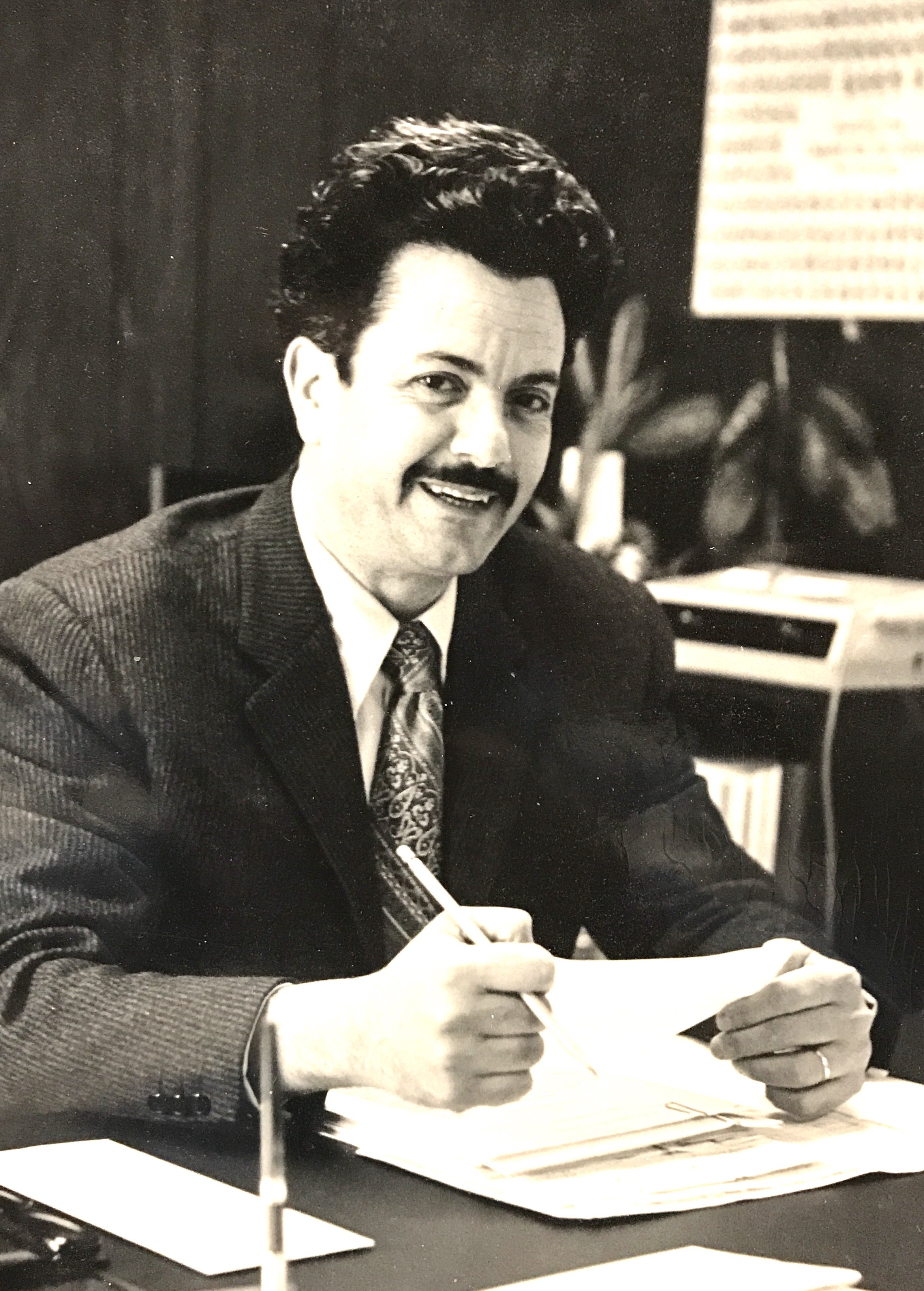
Sami is at his favourite place, behind his desk and “being” a lawyer
We continue with conversations, lessons, and observations—how I lived with my father or how he endured living with me. I am convinced that children embody the best and worst traits of their parents. I am exactly that. Sometimes, I see a character trait and assign it to my dad; other times, it’s my mom. This isn’t about right or wrong, good or bad; it simply is.
FIRST MONEY STORY
As a financial planner, I became acutely aware that each of us has a unique money story. Every decision we make is rooted in our accumulated experiences. When we meet someone and form a life partnership—whether as a spouse, business partner, or common-law partner—we bring our histories and complications, or whatever we want to call them, into that relationship. It is crucial to understand each other’s journeys. This understanding forms the foundation for moving forward; otherwise, conflict is almost sure to arise.
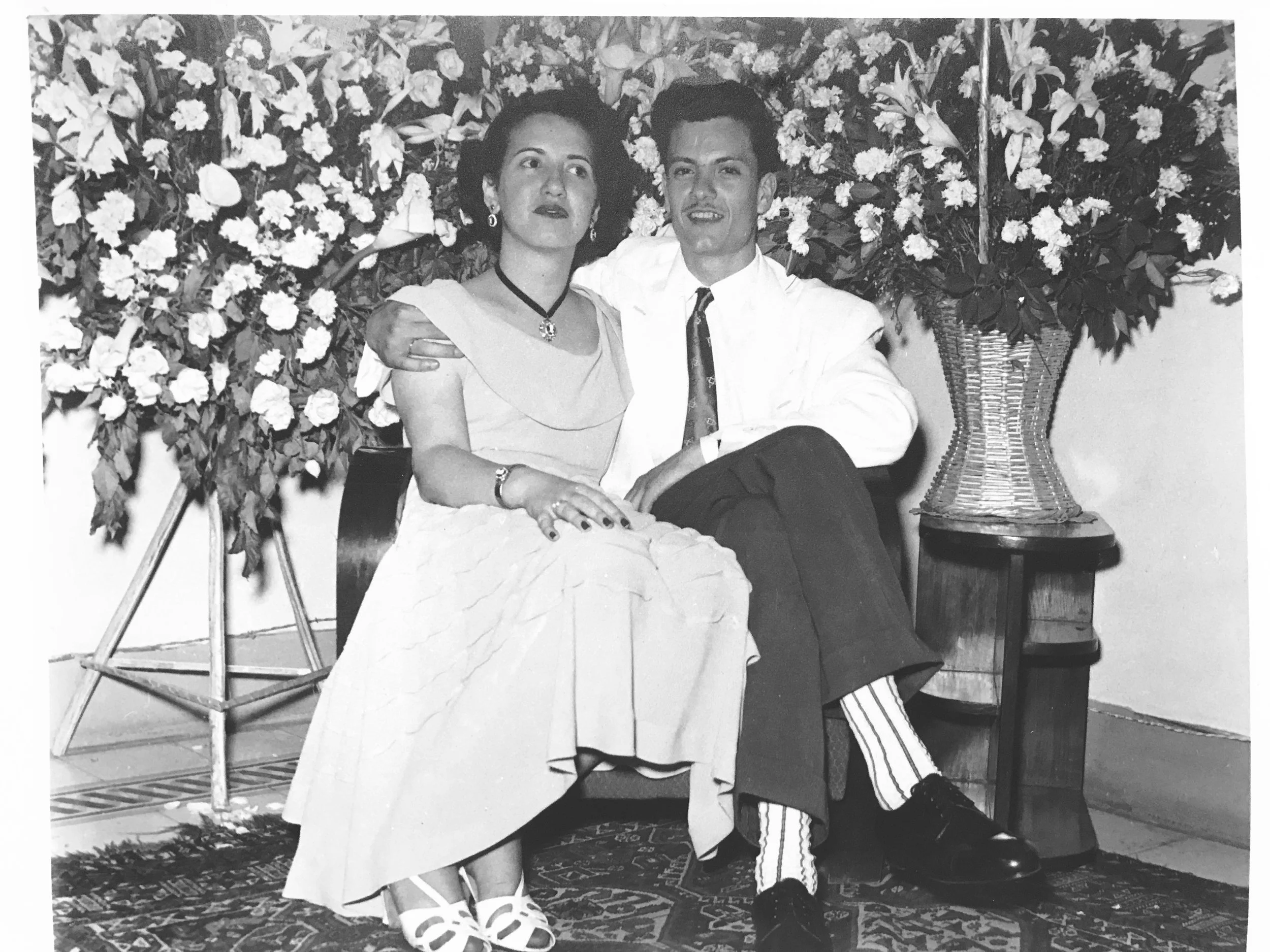
Two very different people who became one incredible couple loved by one and all
Another twist in life is that our children combine those two money stories to create a new blended approach.
Mom and Dad had different money stories. Neither placed value on accumulating wealth for its own sake, but their spending habits varied greatly. For mom, it was about freedom and the joy of helping others. I often proudly said that my mom had the second-largest Christmas shopping list after Santa. Everyone she knew was a potential recipient; if not them, then their children.
Then there's Saint George Church – she never wanted for anything, and at any event she hosted, instead of gifts, she would give the gift-givers a mandate to write a cheque to Saint George Church.
Dad was more frugal in areas where he didn't want to spend money. I can give a clear example. When they bought their first house, a semi, it was around the time dad was back in law school, and mom was the breadwinner. Funds were tight with the house payments, law school, raising two teenage boys, and supporting my grandmother. Mom wanted wall-to-wall carpet, but Dad bought her a cheap shag broadloom that was rubber-backed. It was one step up from indoor-outdoor carpeting. He bought ends and didn’t worry much about colour.
He bought it in the late sixties; it was a gold-and-green, rubber-backed shag beauty. Mom didn’t have much say in the colour. Typically, this type of carpet lasts about 5 to 6 years. In 1976, I was hired by the Hudson’s Bay Company to sell broadloom. That’s when I realized just how low-end that carpet truly was. I tried in vain to get Dad new carpeting, since their shag was at the end of its expected lifespan. Dad would have nothing to do with it; it was fine. It wasn't until the mid-eighties that the shag was replaced. At that time, it was a discount available exclusively to carpet salespeople for personal use, at half the retail price. Mom and I conspired against him and arranged for the replacement, including installation.
Dad wasn't cheap; we described him as frugal. He spent only what he could justify. Once he became a lawyer and could afford it, he had a brand-new Lincoln every two years. If it was for Mom, no problem. Anything else that wasn’t on his radar, you would practically have to gift it to him.
In the early nineties, Dad decided to equalize potential estate gifts so my brother Kamal and I would receive equal inheritances. One item was a gold watch he had inherited, appraised at $10,000. To balance things out, he bought a new watch of the same value. As the older son, he gave me the first choice—whether to keep the family heirloom or the new watch. He called me into his office and said, without much preamble, "Would you like the old gold watch or the new one?" I was confused and asked why I would want a watch since I don’t wear one. He looked surprised. "Don’t you want to know what time it is?" I replied that I knew the time because I had car clocks, wall clocks, computers, and desk clocks everywhere. That was when I understood his intention and convinced him to take the other watch back. I had no problem with my brother having the family heirloom. Ironically, that watch was worth exactly twice what the broadloom in the living, dining, and family rooms, along with all the halls and stairs, cost.
NUMBER ONE ISSUES
Dad could not resist the deals advertised in the TV Guide or magazines, especially for top-selling books. If there was a gardening encyclopedia with the first issue free, he would order it. He loved a good deal and would cancel it as soon as the first issue arrived. I am sure he joined the Columbia Record Club several times over the years. He had quite the collection, including how-to encyclopedias and Reader's Digest hardcover books. Grocery stores often offered encyclopedias with the first issue at $1.99 and all subsequent issues at $6.99; he would buy only the first issue. His theory was that every first issue was full of useful information, and that reading and knowing that much was far better than not knowing anything. I learned very little from that buying habit; instead, my mother’s influence made me buy the entire set – case in point being the two series from Time-Life, Artists and Photography.
JOBS IN CANADA
In Egypt, Dad was a very successful lawyer at the top of his game. Circumstances made it very difficult to stay in Egypt. When the revolution happened, it became clear that his clients' businesses were either nationalized or simply left the country. They began considering alternative places to live. My mother’s brothers lived in New York. They were granted access because they were both born in the Sudan. However, the limit for Egyptian nationals in the USA had been reached, so Canada became the first choice. There is not a day that goes by that we are not grateful for that first choice. We have all felt that, despite any warts Canada may have, we still won the lottery of countries to end up in.
At first, Dad was told he could practise law in Canada. Then, when we came to Canada, the condition was that he could practise only in Quebec, as it had the same Napoleonic Code as Egypt, and the rest of the country practised English Common Law. We settled in Toronto, and Dad worked to get accredited, but first, he had to provide for his family. What to do next became the issue. As is all too often the case, he had to do what immigrants had to do, “whatever it took” to keep a roof over our heads and food on the table.
He tried selling Encyclopedia Britannica, successfully selling three sets: one to himself, one to my uncle, and a third to a single mother. However, when he learned of her financial situation, he spent the rest of the meeting trying to talk her out of buying it, since she was clearly unable to afford it. He quit immediately after that sale.
Dad was a highly accomplished violinist, so what could be easier than teaching something he was passionate about? He thought it could be a very long career. He would listen to great music, teach the fine points and theory, and discuss famous composers like Tchaikovsky and his favourite, Beethoven. The only problem would arise almost immediately: the students. I think it was his second student—he was so bad that Dad grabbed the violin from him, handed it to his mother, and told her she should never give it back to her child. He quit that night.
Dad tried driving a cab, never overnight, but late enough, and he never told Mom what he was doing at the time. That didn’t last long either; there was no satisfaction. He taught himself English and got a job as an ESL teacher. That one lasted several years.
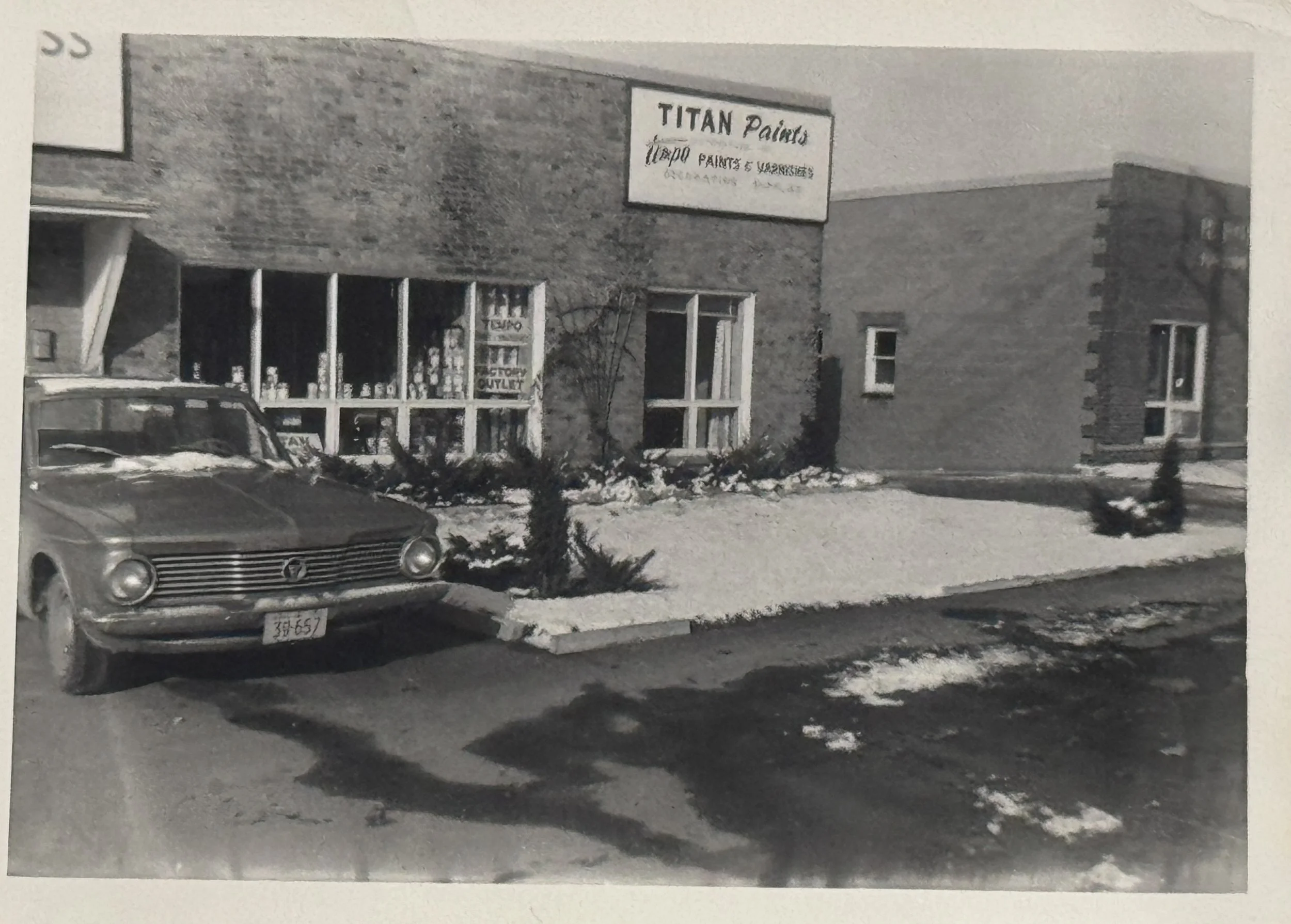
Our Valiant in front of Titan Paints
Then Dad got a job that showed things happen for a reason. He worked at a paint store and flourished there, eventually managing it single-handedly after the owner recognized his trustworthiness. Dad was also excellent at helping customers. Sometimes he would deliver large paint orders even during our weekend picnics. On our way to the picnic, we would stop at the store to pick up the paint and deliver it to the customer’s house. I remember many such stops, so it wasn't an isolated incident. He also worked on Sundays when the store was closed, and I remember going in with him to organize the paint cans, brushes, and stir sticks. To this day, I am certain that it was Dad’s need for order, some might diagnose it as OCD. At the risk of self-diagnosis, I may have inherited some of that, as I periodically find myself straightening things on a store shelf.
As an aside, the mischief-maker in me would do two things in my parents’ house just to let them know I was there when they were not. I would go into the office, then into his desk drawer, where I would find all the pencils sharpened and pointing in the same direction, organized by their outer paint colour. Then I would mix them up on purpose. I would even have some pointing the other way and reorganize where they rested.
My mother also had her OCD moments. She would vacuum the living and dining rooms to avoid leaving footprints on the carpet. She would immediately know I was in the house because I left a trail of footprints around the dining table. That night or the next day, she would make a point of letting me know she had seen those footprints, which would bring a smile to her face.
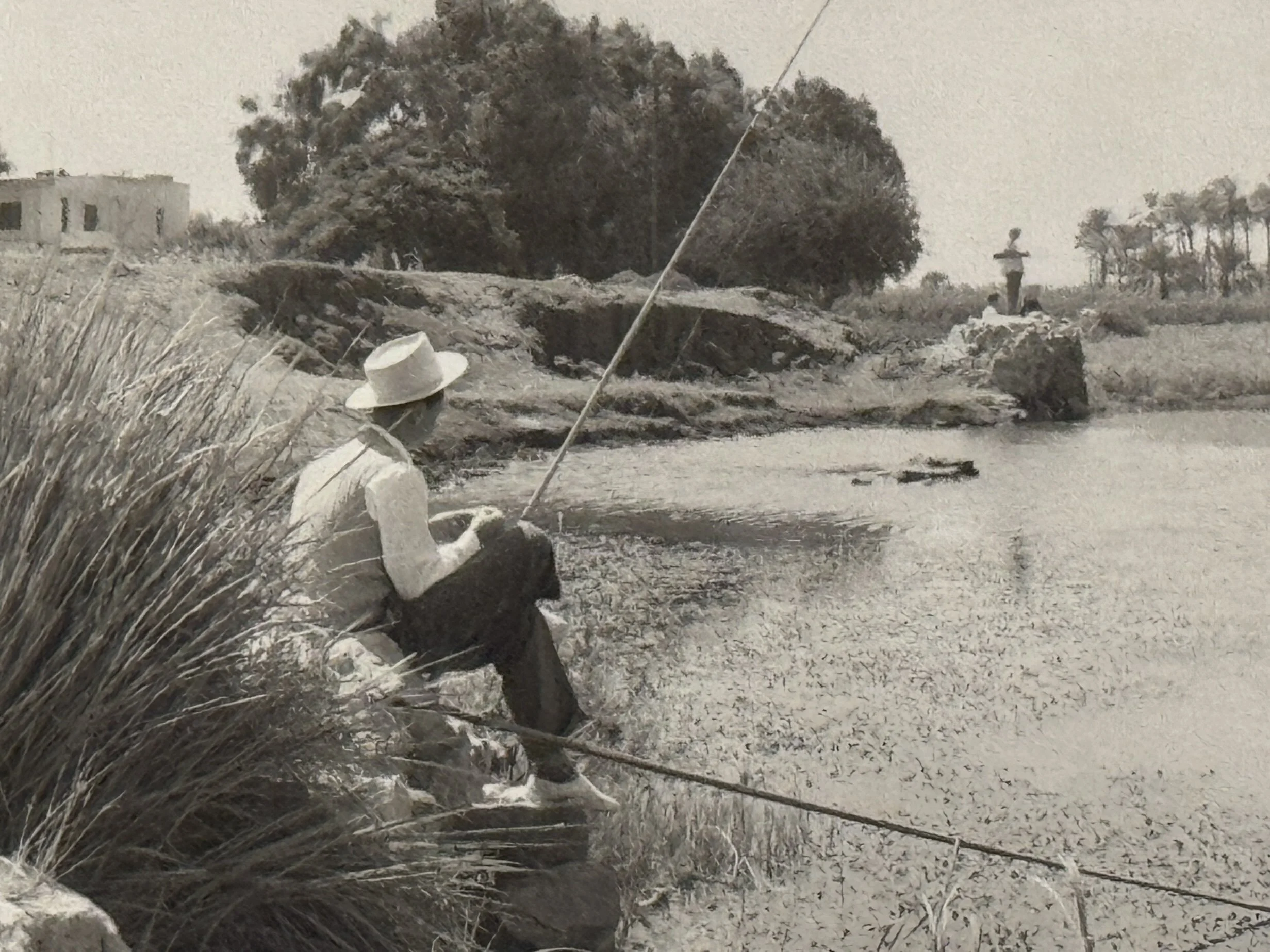
Sami had a favourite fishing pond called “El Aleg”, in the outskirts of Cairo.
I believe a master plan is at work. How else would you explain what happened to Dad next?
One of the paint store's customers worked at his son’s law firm as a conveyancer. He got to know Dad and heard his story about being a lawyer in Egypt. He convinced his son to hire Dad away from the paint store. Meanwhile, Dad had been applying to law school and was eventually accepted. He was 36 years old and returning to university. As irony would have it, that was the age I was when I changed careers and went back to school to become a financial planner.
Dad was passionate about becoming a lawyer; he would do whatever it took to achieve that goal again. Mom was equally committed to doing whatever was necessary, even taking an entry-level job in the hospital kitchen as her first job outside her home. With her skills as the boss in the kitchen, leading a staff of three servants in Egypt and managing all the parties, she was a natural. It didn’t take long for her work ethic and supervisory skills to stand out. Soon after being hired for the food line, she became a line supervisor and eventually a kitchen supervisor.
It wasn’t long before their story became a cause célèbre among the hospital staff. Mom didn’t drive; her shift started at 11:00 AM. Dad had to be in class by nine; he would drop her off three hours before her shift began, then drive to school, nearly an hour away. He would finish between three and four p.m.; afterward, he would go to the hospital cafeteria, where staff would ensure he had a meal and privacy to study for three to four hours until Mom finished. He balanced school with a lighter workload at the law office, where his legal skills were evident.

First step, Lawyer at Copeland, MaKenna & Kennedy. Next step, Partner, then sole practitioner.
After graduating, he secured a position as a lawyer at Copeland and Mackenna. The workload was physically demanding, and both Mom and Dad experienced medical issues during his third year, prompting him to extend the program by a year. The faculty and administration supported him, recognizing his passion and dedication to becoming a lawyer.
Eventually, he graduated, became a lawyer, and, as promised, was hired by the firm. His long-term objective was to become a partner and, eventually, a sole practitioner.
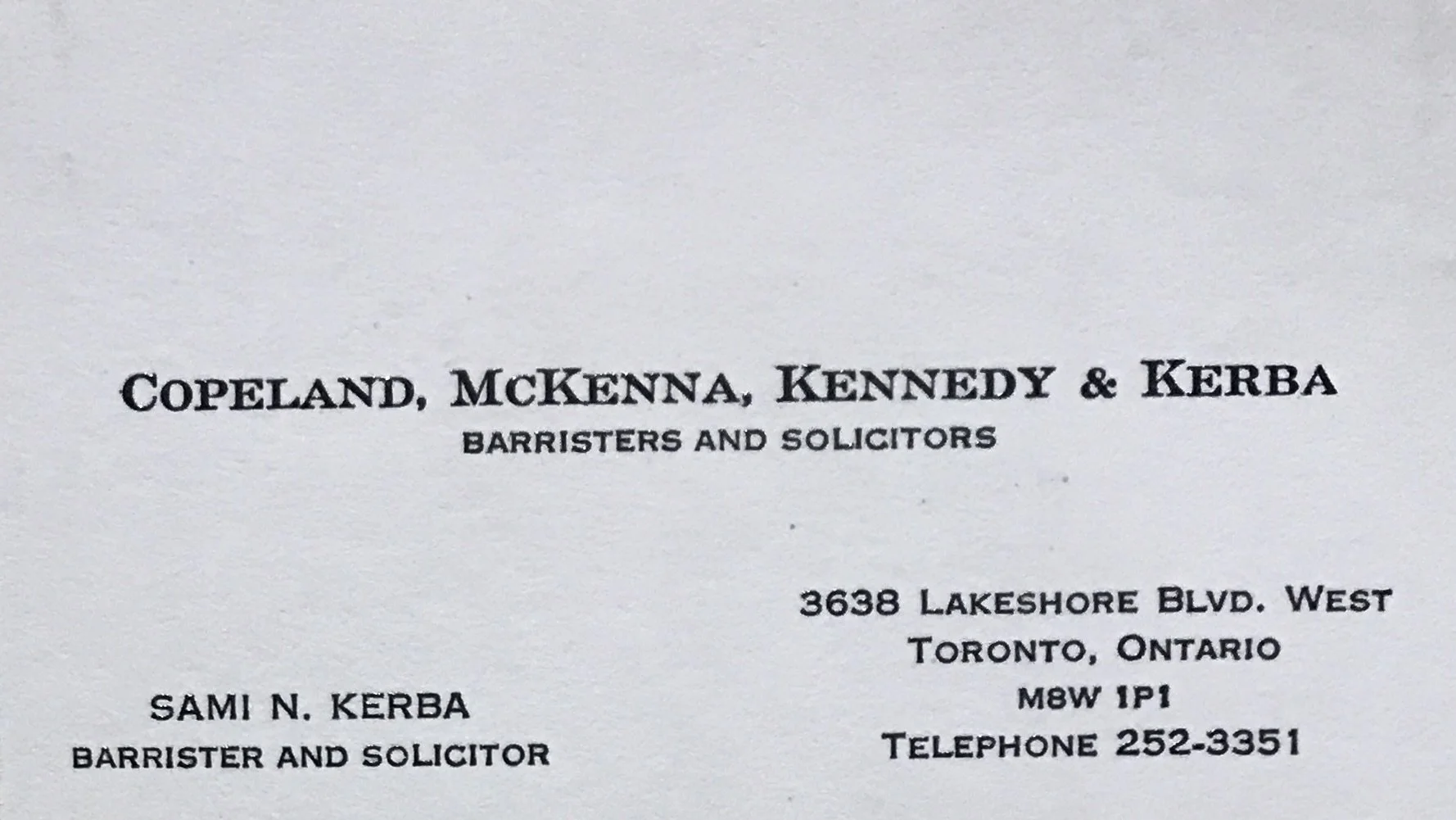
Partner at Copeland, McKenna, Kennedy and Kerba
I pride myself on being a planner because I saw Dad meticulously plan everything he did, whether it was his career path or travel. Each trip had a binder and involved communicating with the relevant parties to ensure nothing was left to chance. The planning wasn’t always financial. For the past forty-five years, my biggest thrill has been using the month of December to put my goals, trips, and anything important to me on paper. By some measures, they may not be grandiose, and for others, they were massive; they were just mine. I have planned dozens of trips and organized binders for all my fellow travellers, including stops and activities on the road.
Like Dad, it was all about the journey, stupid. I’ve never raced to get to the destination. It is heartening to see how Chris, my son, has carried on the tradition with his bands, creating templates he shares with his bandmates to make sure they know who arranged the gig, what their accommodations were, theatre contacts, and sound checks. The tradition lives on!
Early in my career as a financial planner, I attended a course whose objective was to get the client to say who they were, not what they did for a job. The idea was to get down to the core of the person to better assist them. I tried it on my dad. His reply was, “I am Sami Kerba, the lawyer.” My challenge back to him was, “That’s what you do, not who you are.” “Well, son, let me explain this basic premise to you. When I say I am a lawyer, you should already know that I am intelligent, a professional, dedicated, and respected. Doesn’t that tell you who I am?” I stopped using that exercise.
Dad finally retired at age eighty; it was really challenging for him to stop because that was all he knew. I am sure that if you had asked him in his sixties whether he would work to that stage, he would have said no. There were several reasons he retired at such a late stage in his life.
Being a lawyer was all he knew; it was his passion. He loved sitting behind his big desk and welcoming people into his kingdom. He loved parking his big car in front of his office to say the lawyer was in!
He couldn’t stand the thought of someone else sitting behind his desk. He would have loved for either my brother or me to sit there and take over the reins. To his credit, even though he would have loved it, he never put any pressure on either my brother or me to become lawyers and take over the business. It simply was not for me. We were free to pursue our passions, just as I now watch my children flourish doing their thing.
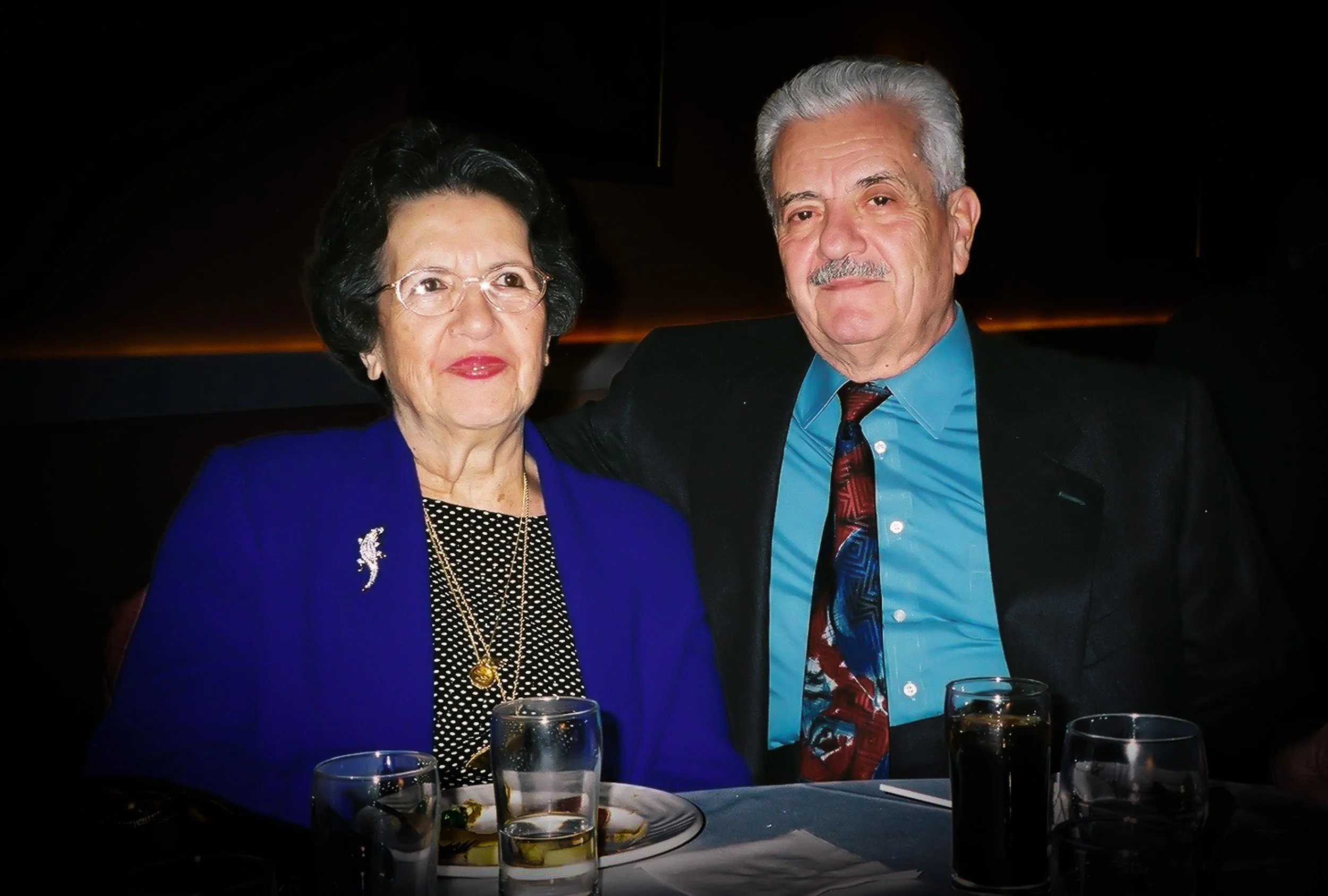
I have never worked at a job I didn’t like. In fact, for the past thirty-three years, I have often said that my job as a financial planner was to visit with people who needed to articulate what was important in their lives. I didn’t work! I visited and had meaningful conversations about what mattered most to the people I was with.
Just like Dad, I needed to be passionate about what I did. I refused to work twenty, thirty, or more years at a job I hated just to get a pension. Unlike my dad, I had planned to stop work before I found it a challenge to continue. I honestly believe Dad would never have accepted his level of proficiency at eighty years of age after the onset of his illness. I would need to transition well before that stage into the other passions I have cultivated over the past half-century. These passions include spending time with family and friends, pursuing photography and writing, having meaningful conversations, and travelling. AND WHATEVER ELSE THE MASTER PLAN HAS IN STORE FOR ME THAT I DON’T KNOW ABOUT JUST YET!
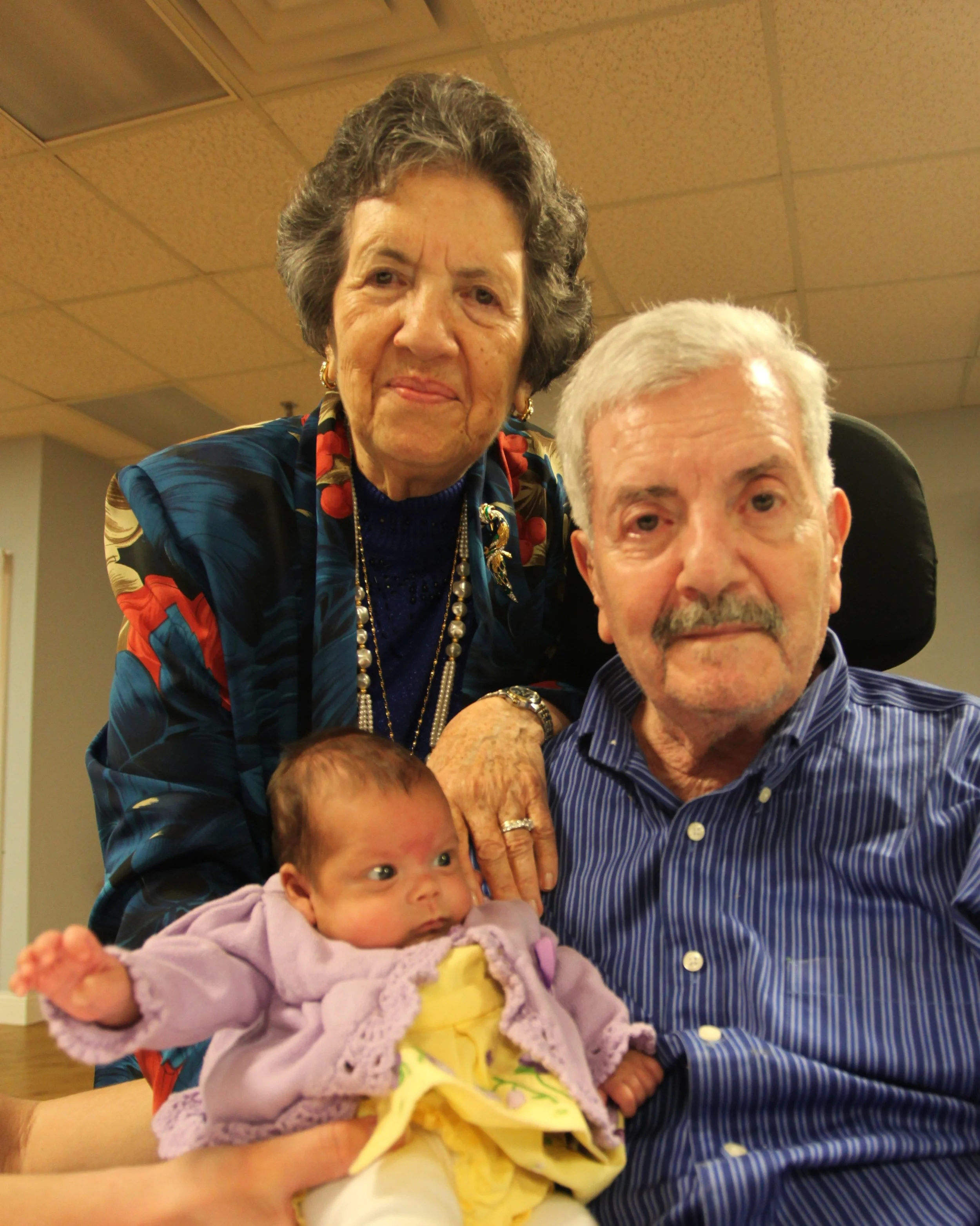
The first great-granddaughter, Ri
Stay tuned for part three when I share more stories about fishing, the grandchildren’s orchestra and the office.