
The Essence of Andy Clitheroe
Loyal ~ Perceptive ~ Ambitious
Humble ~ Principled ~ Vigerous
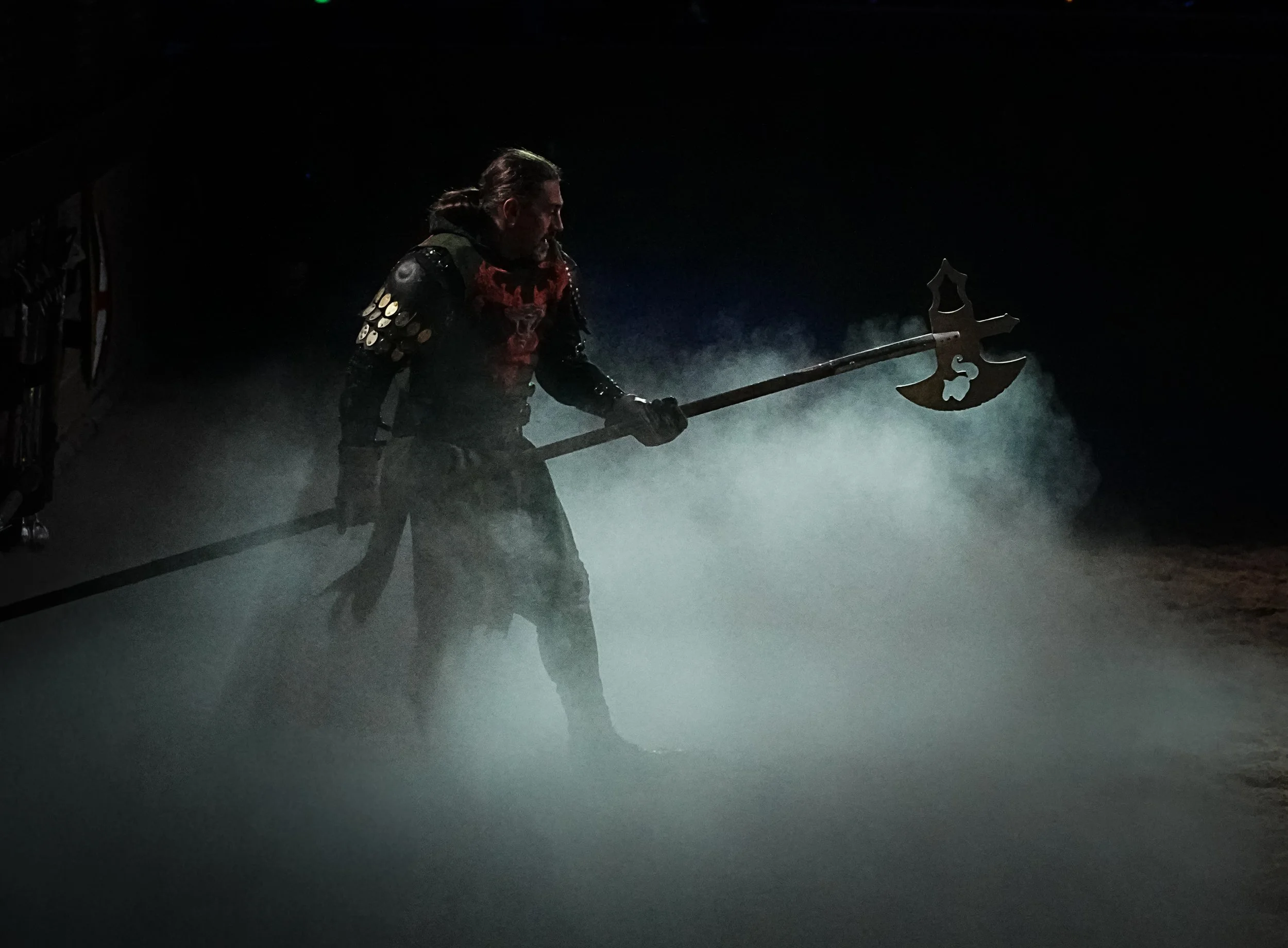
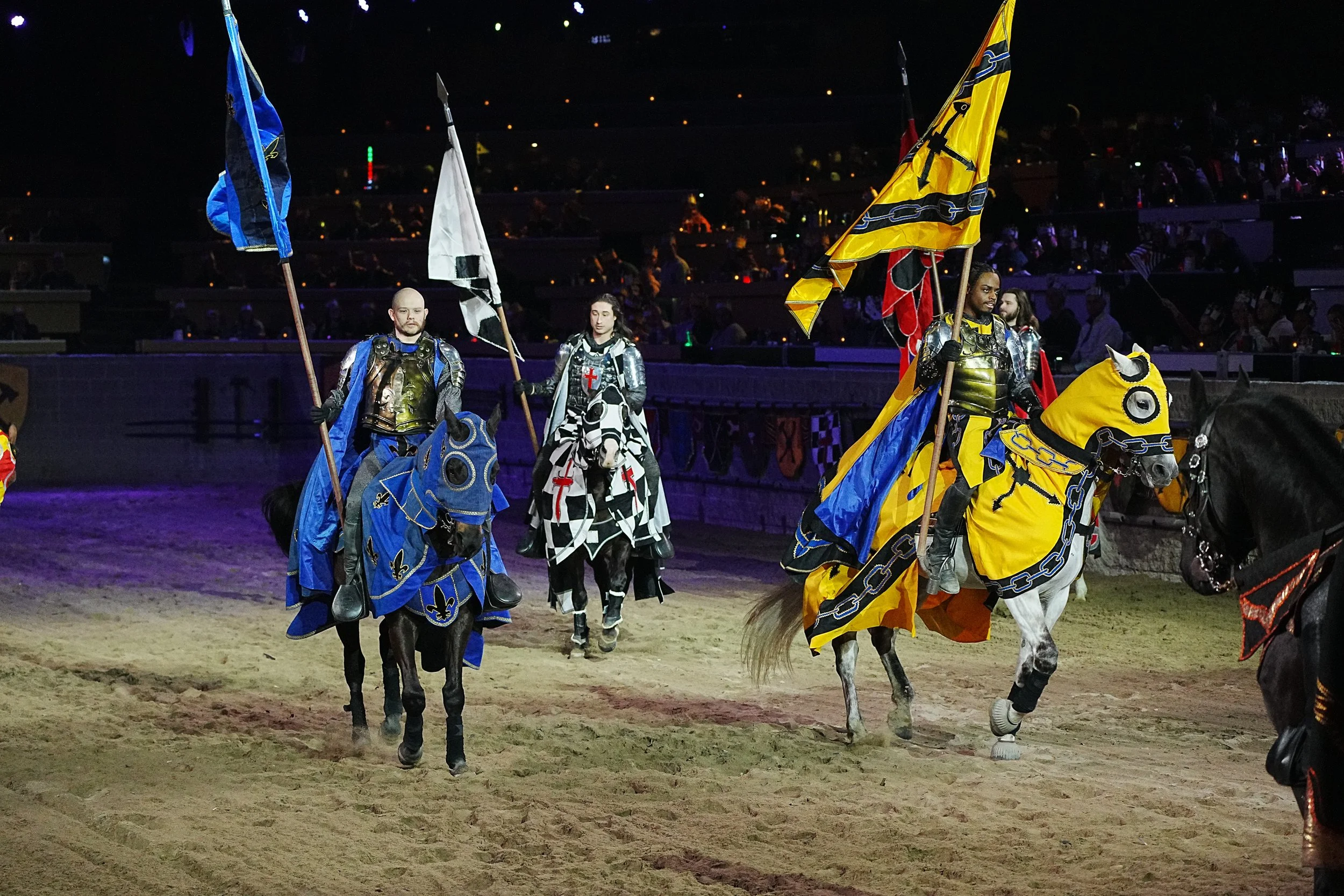
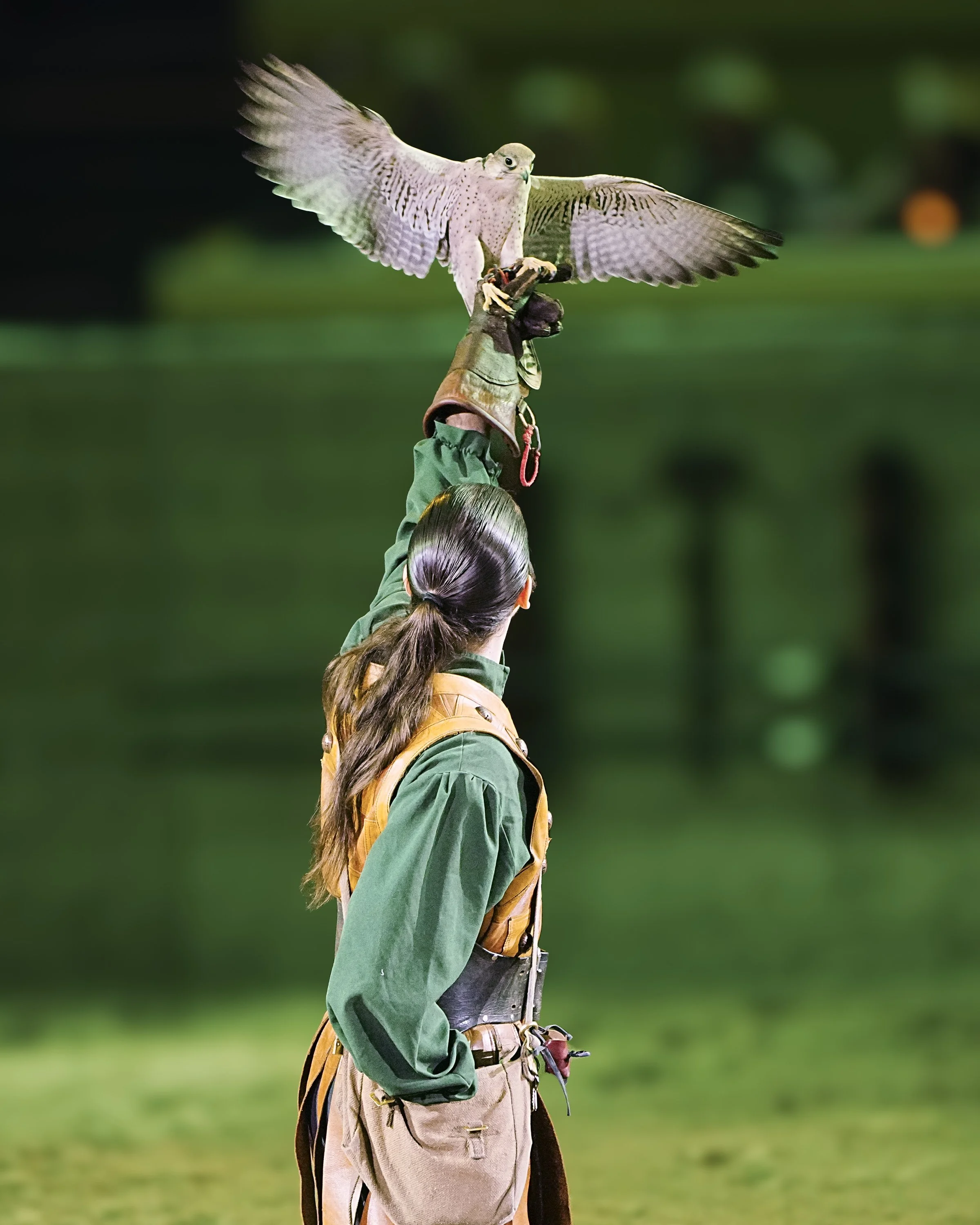
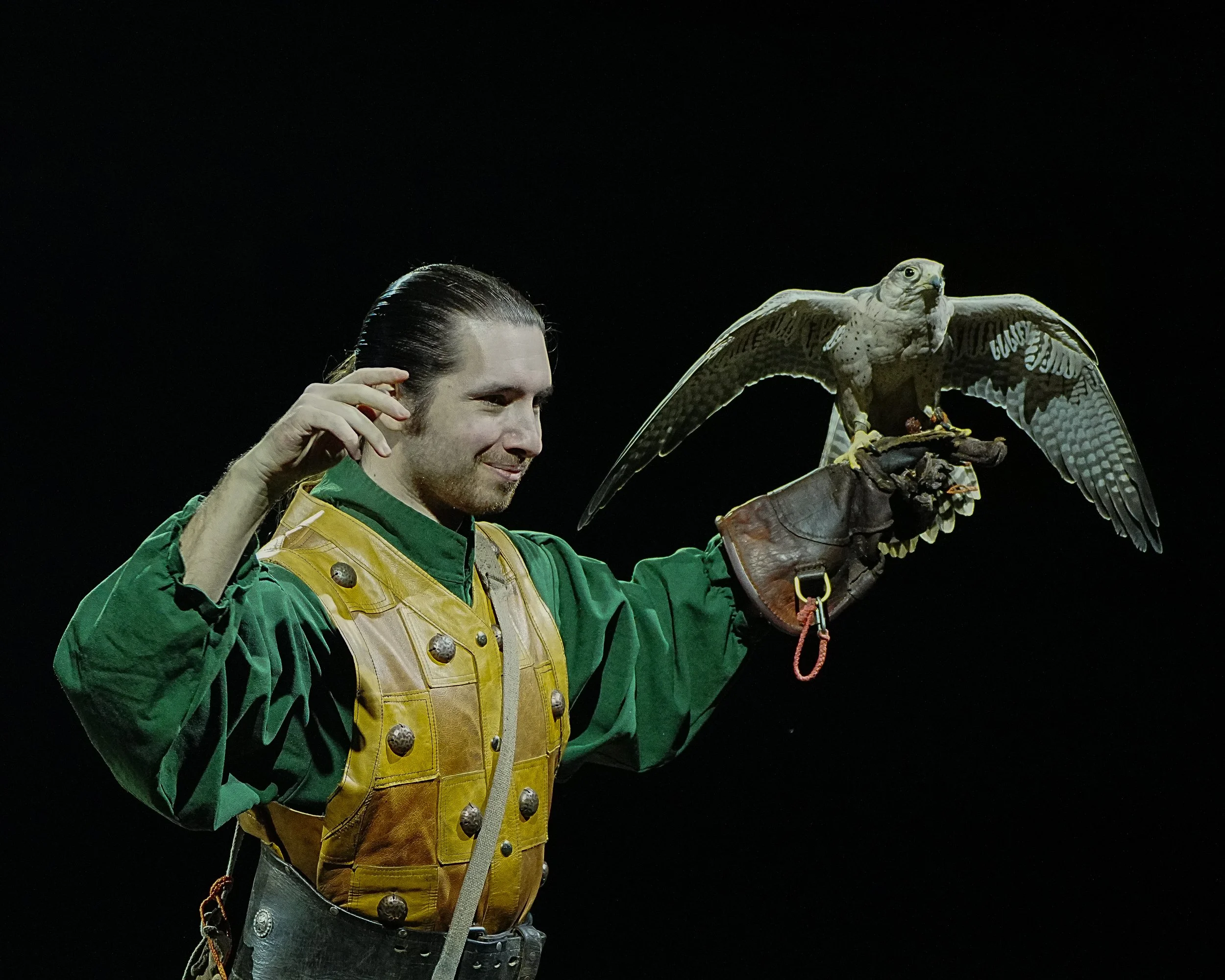
Andy has been a fixture at Medieval Times in Toronto for 33 years
I recently met Andy Clitheroe for the first time. This was an introduction by Dan Bodanis. Dan is a big supporter and a great friend of my books and photography. In fact, none of these would be possible without Dan’s assistance.
After connecting with Andy, I knew he was a perfect fit for this book, the Passion and Purpose of Ordinary People. Meet Andy in pictures and his words, you will soon come to realize he is an authentic and passionate man.
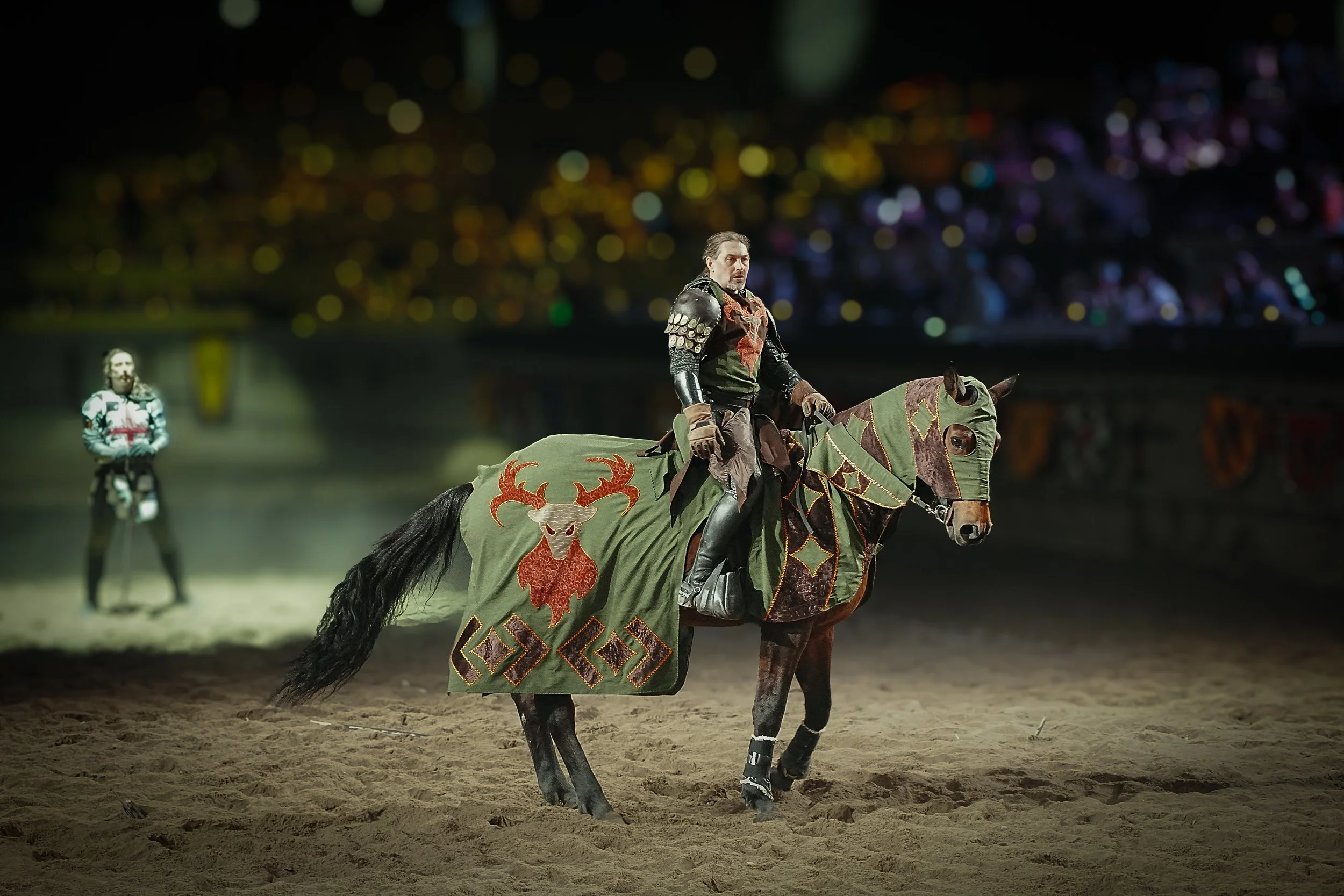
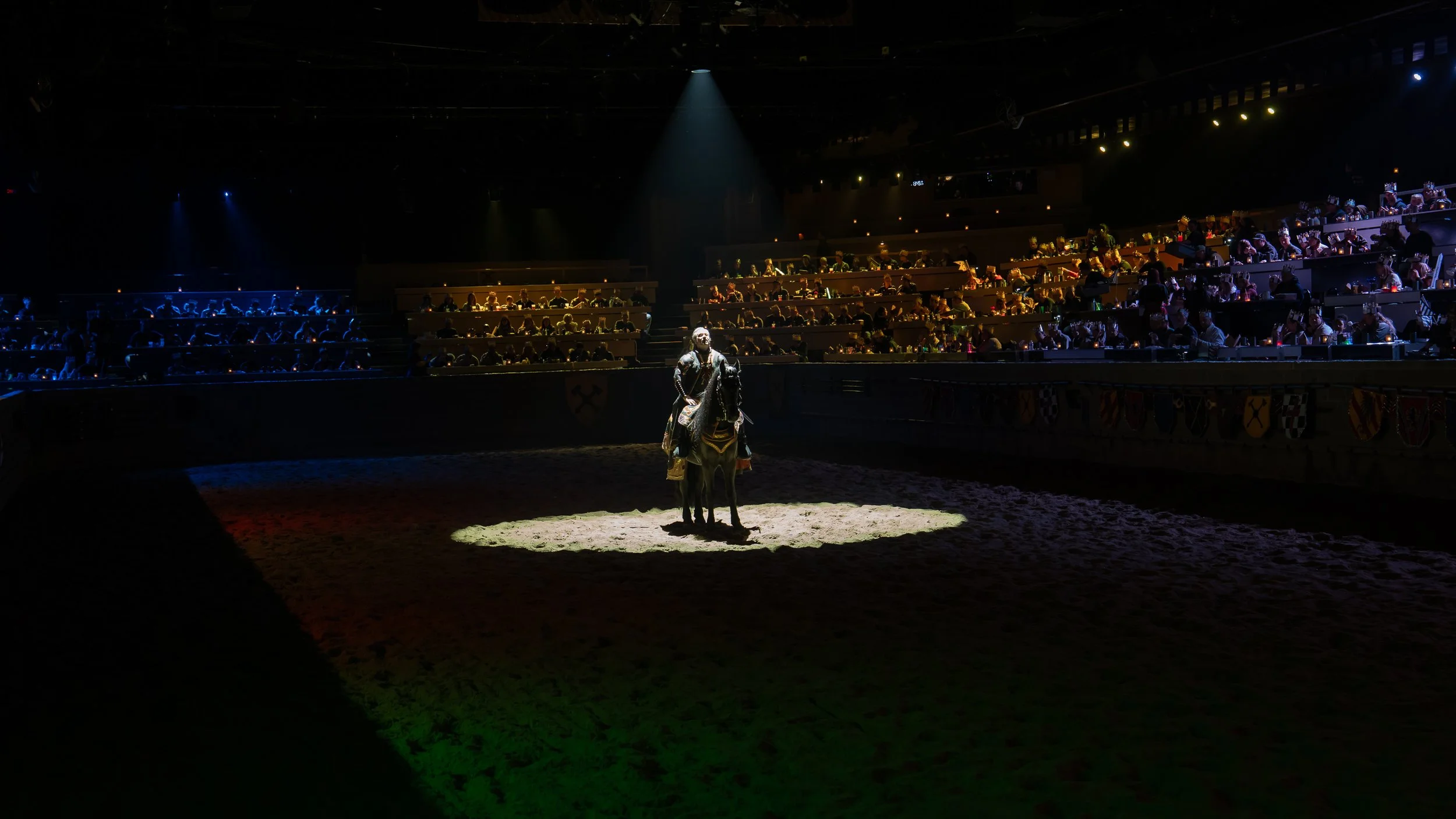
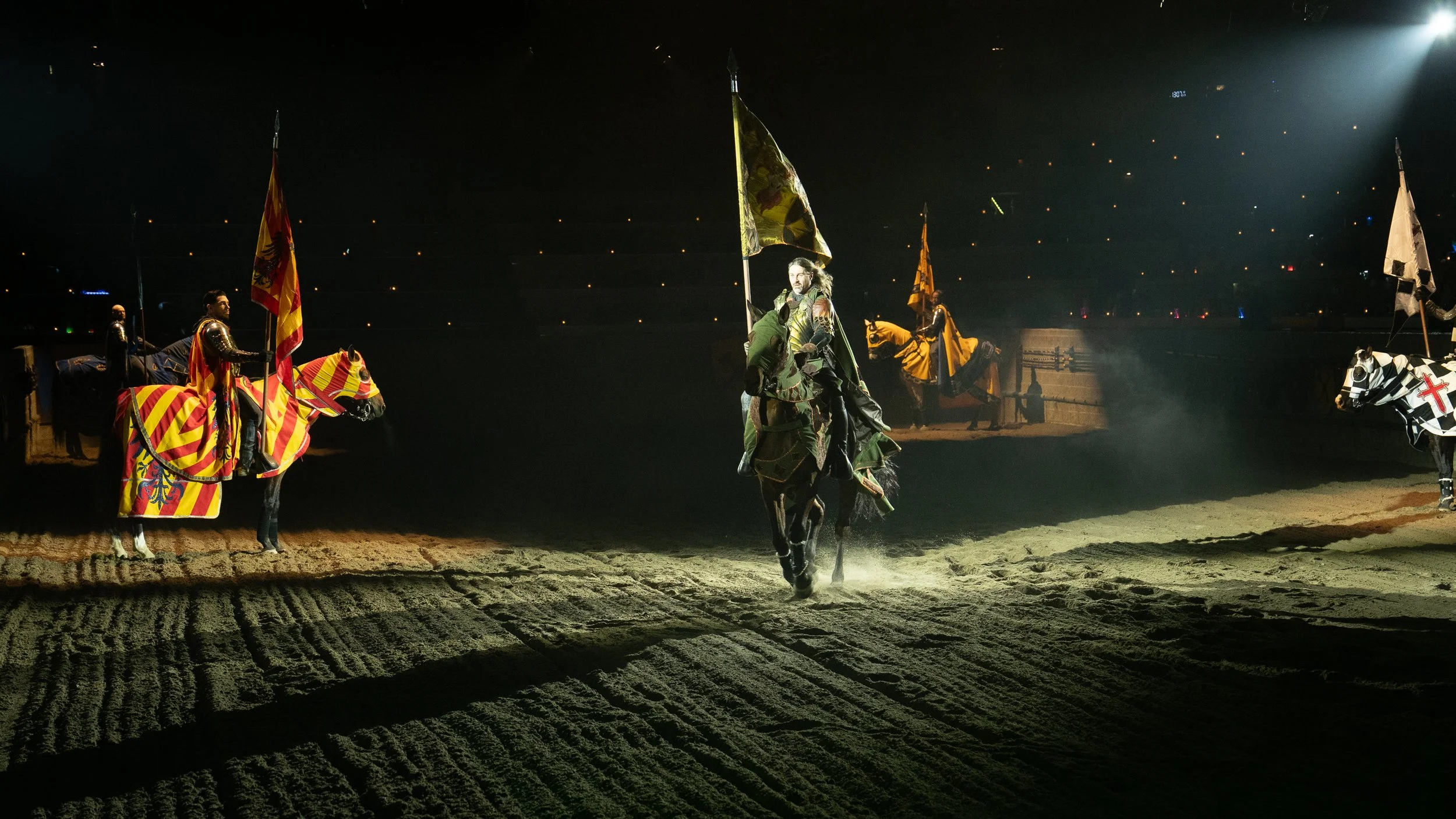
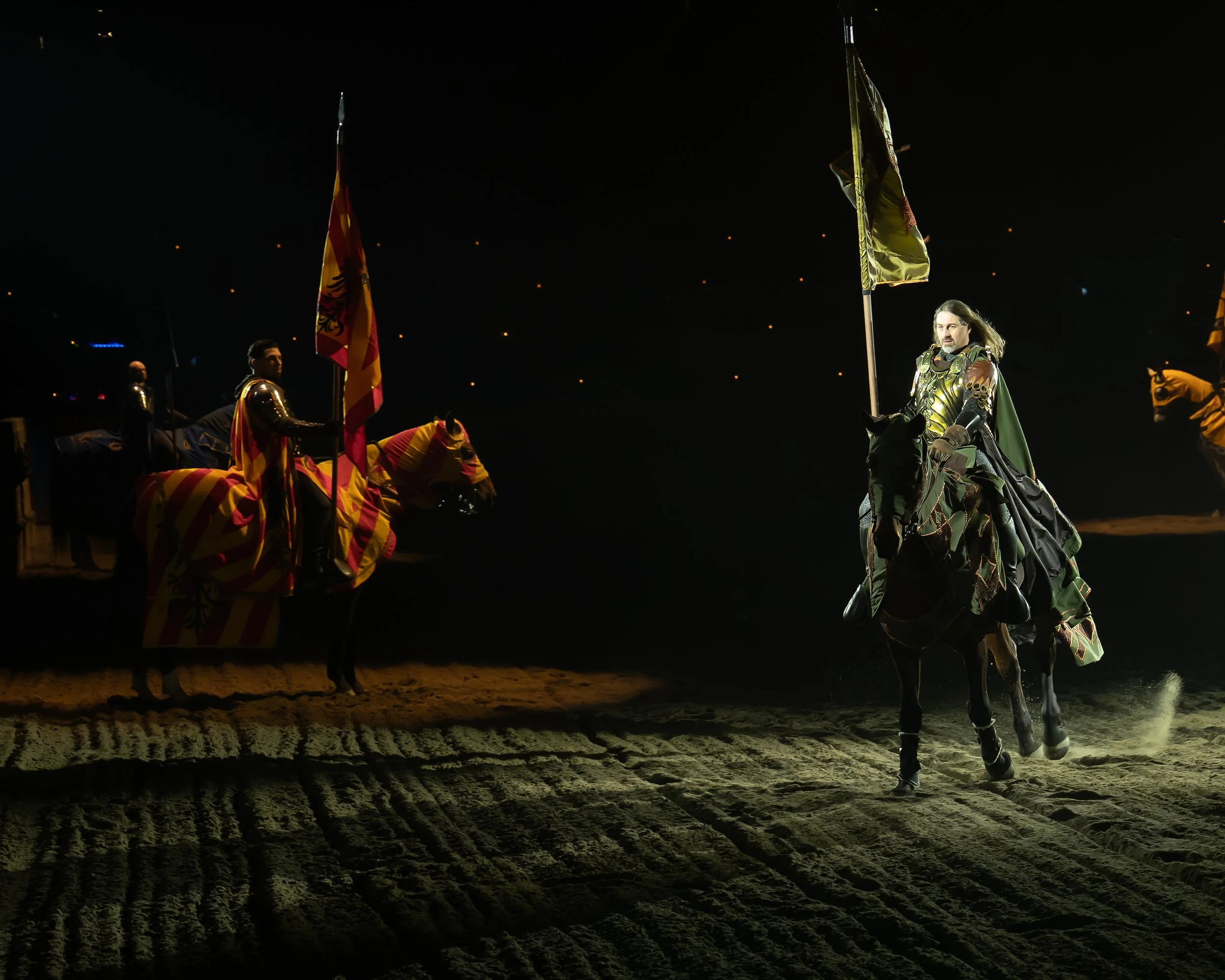
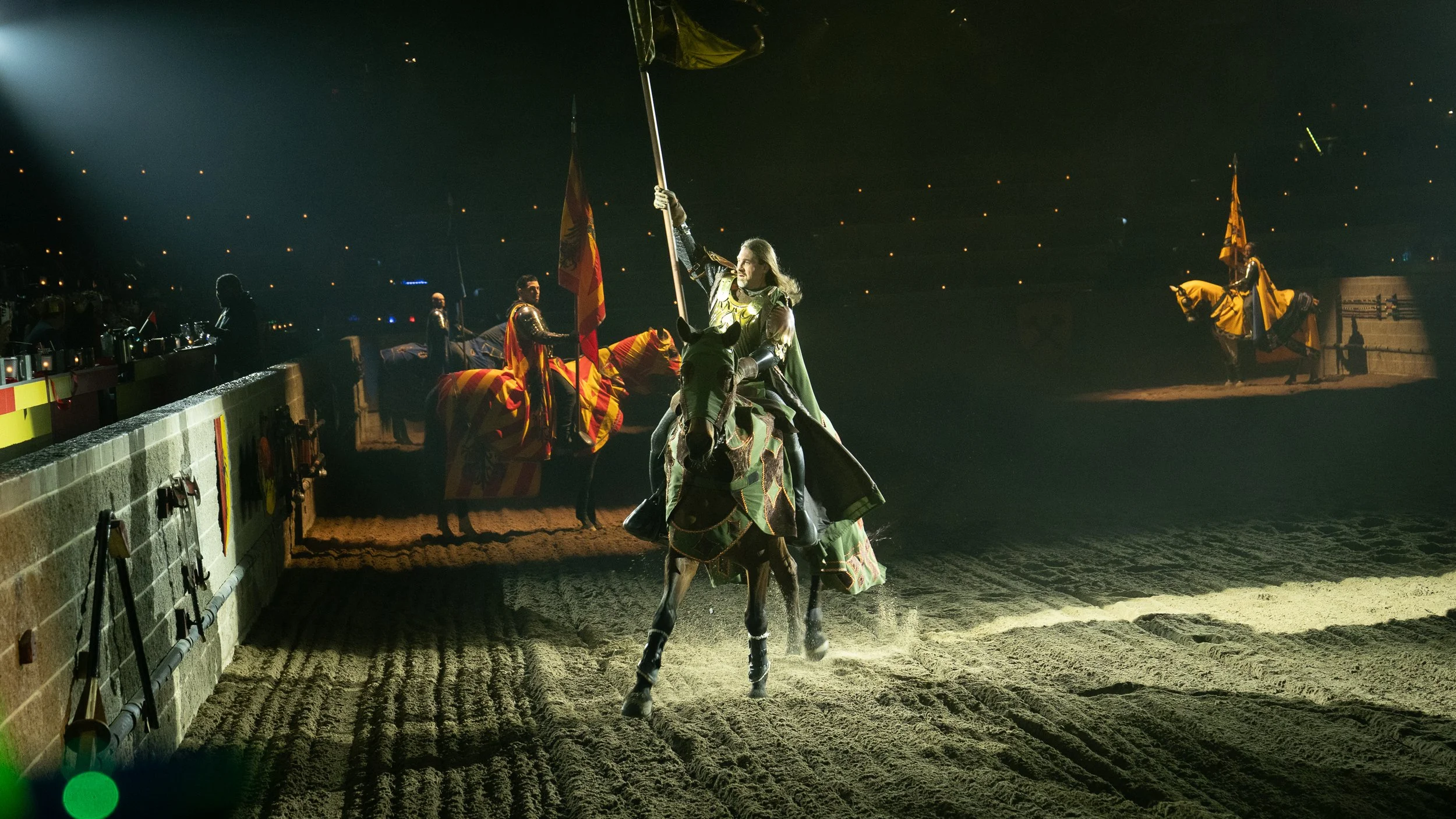
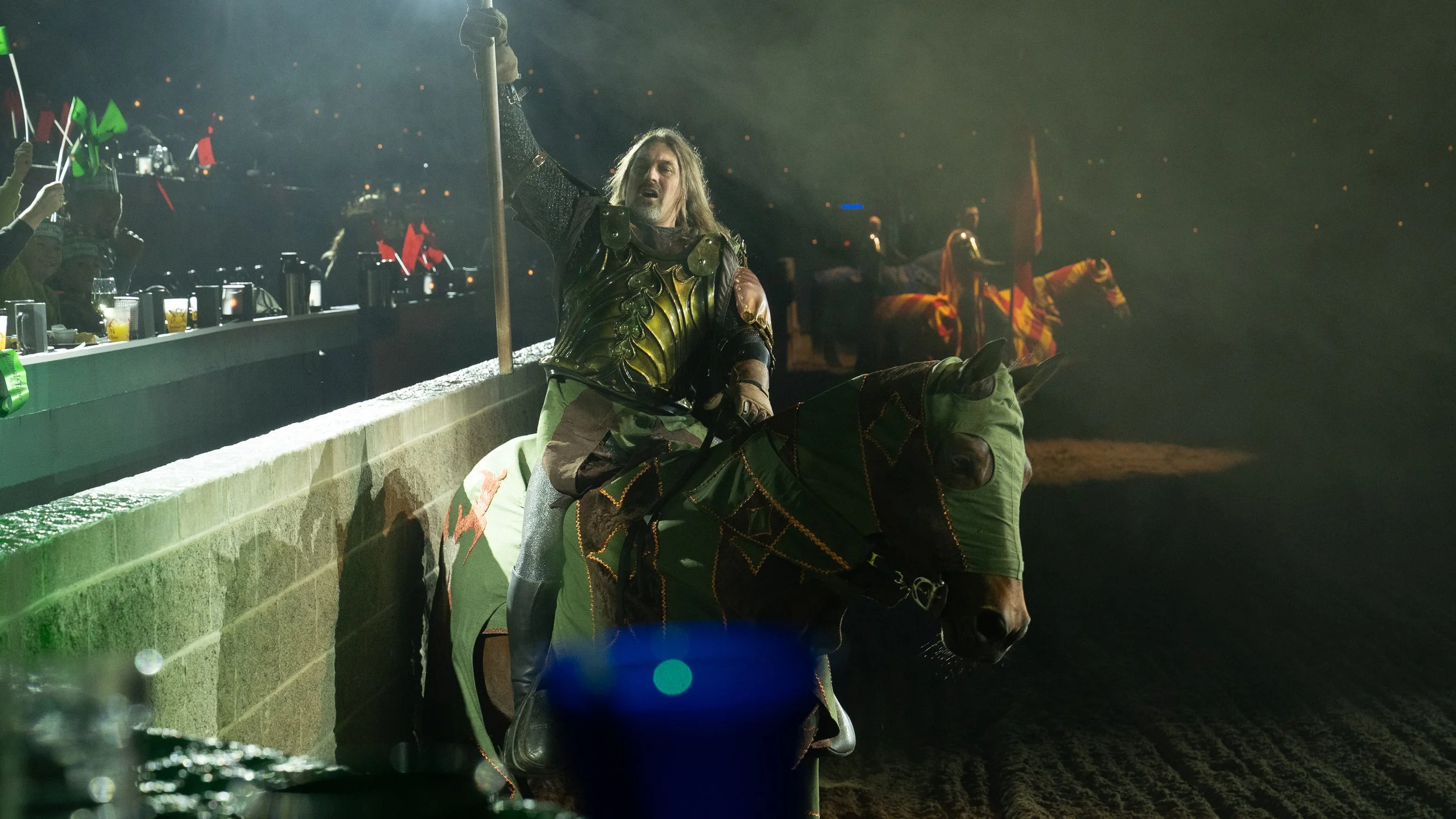
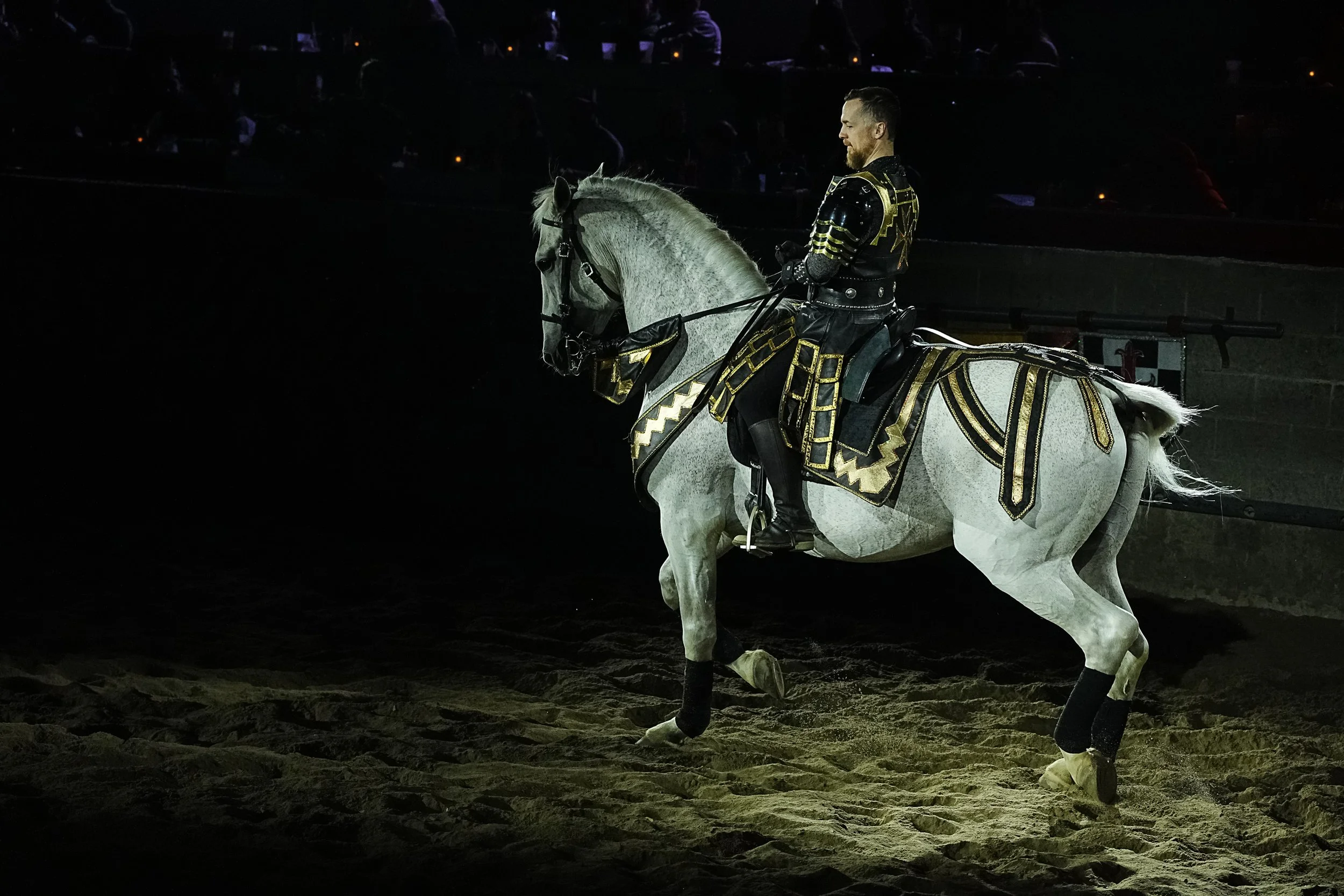
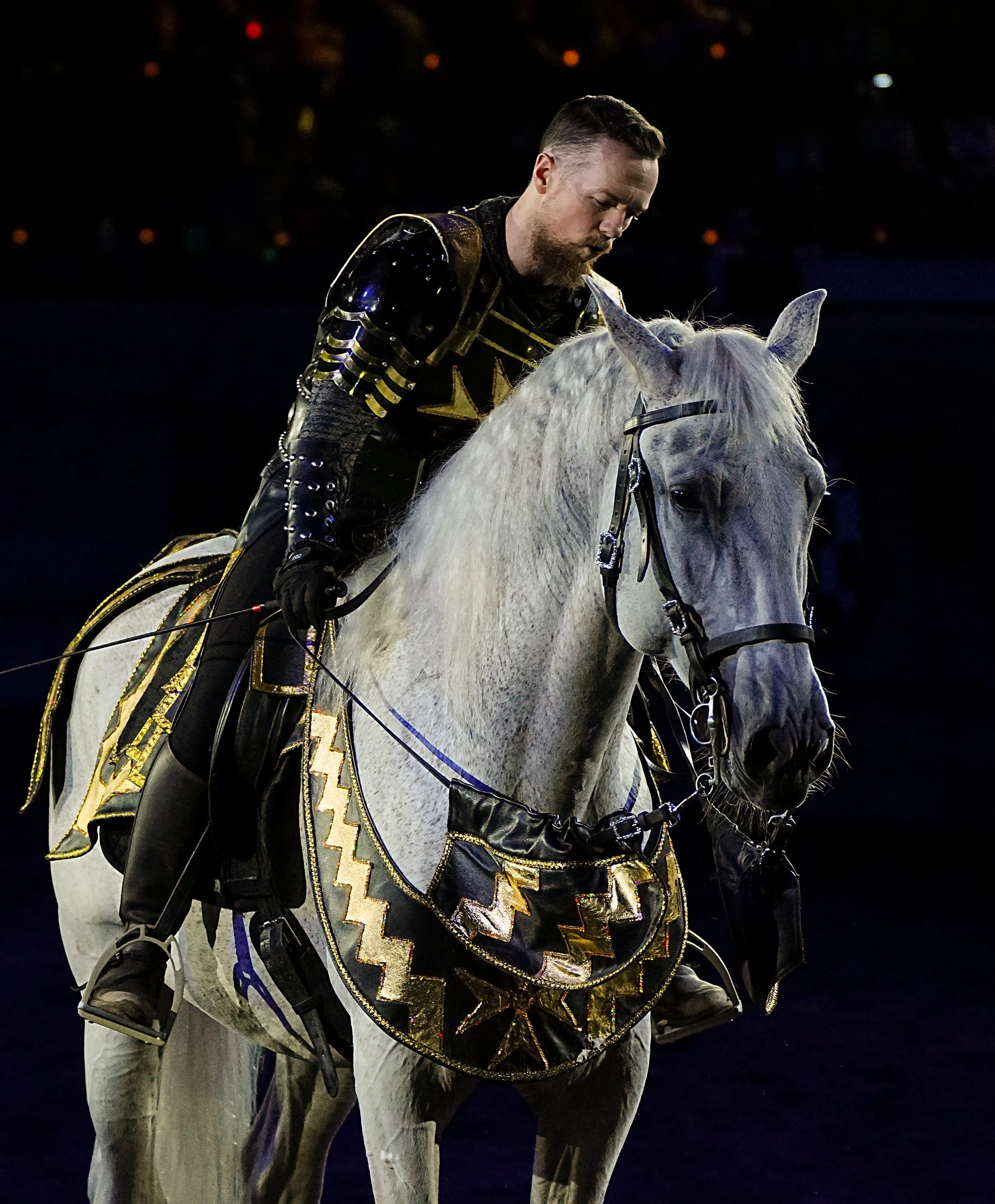
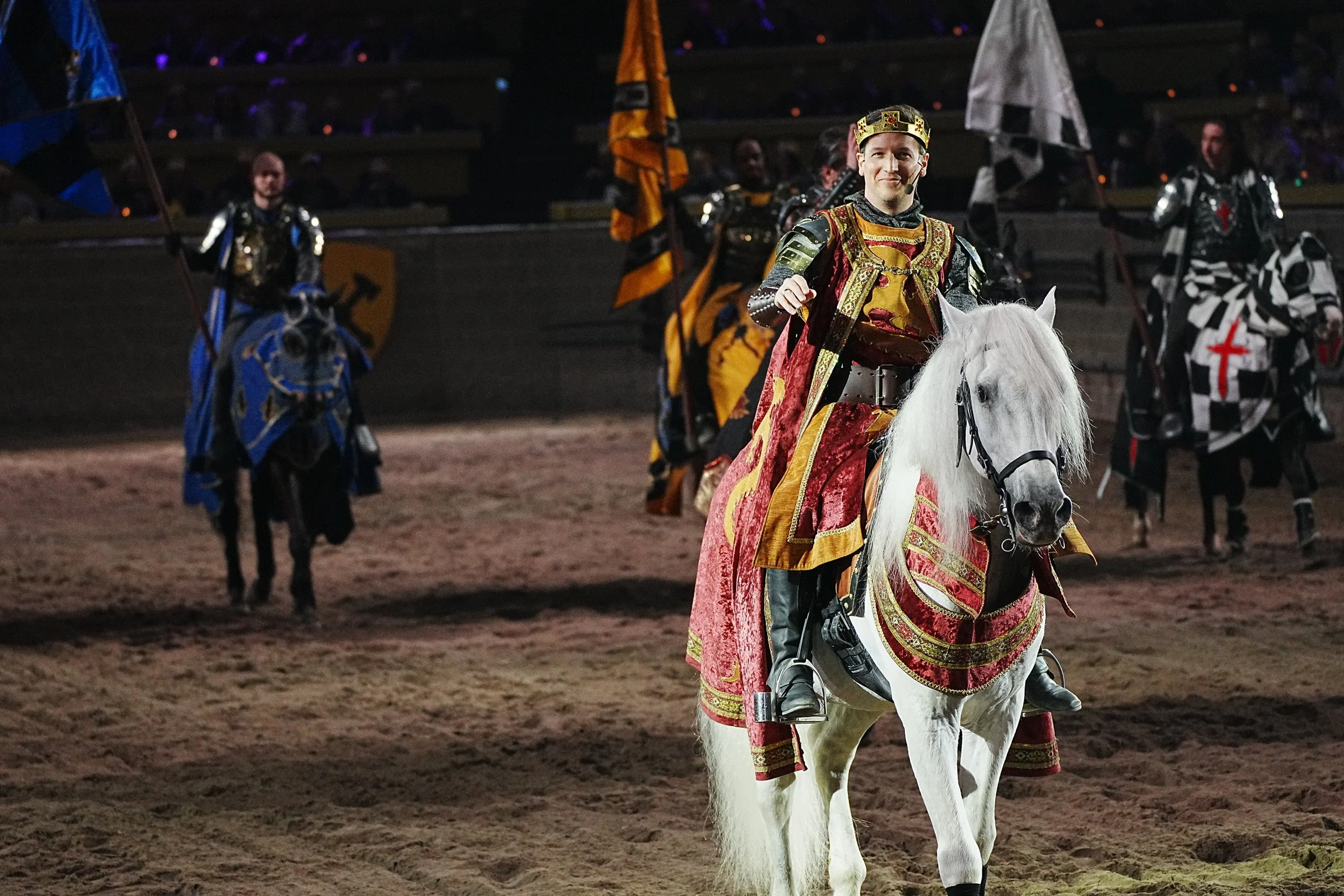
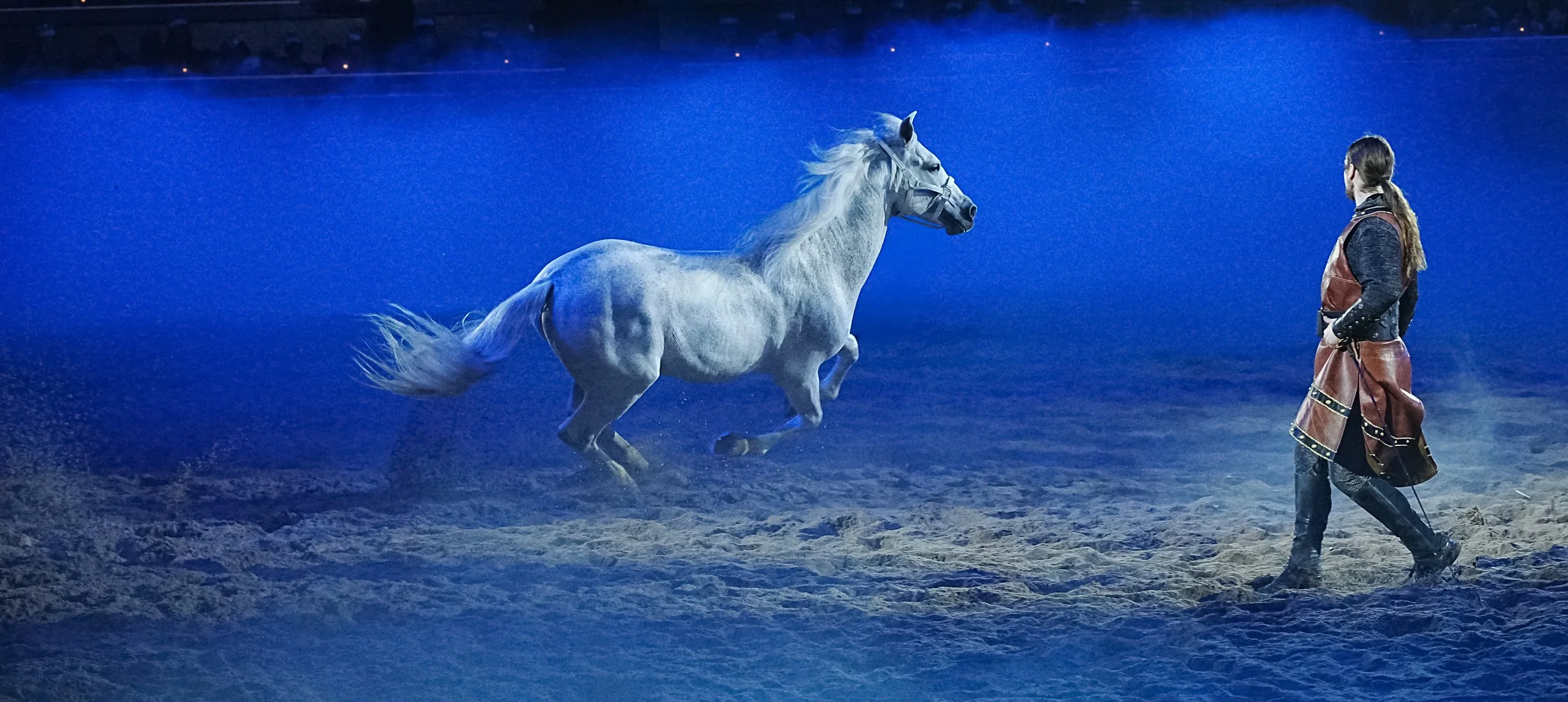
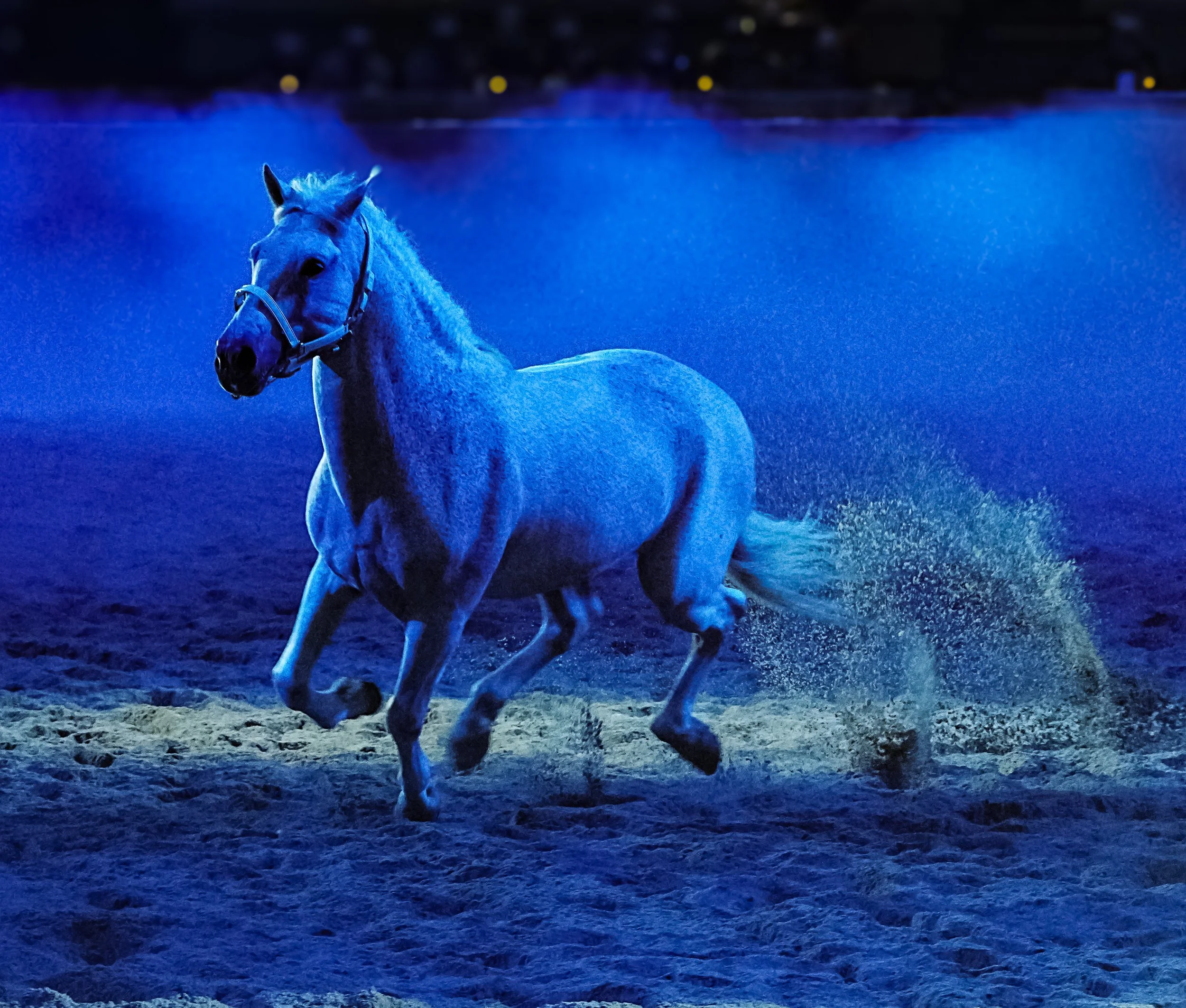
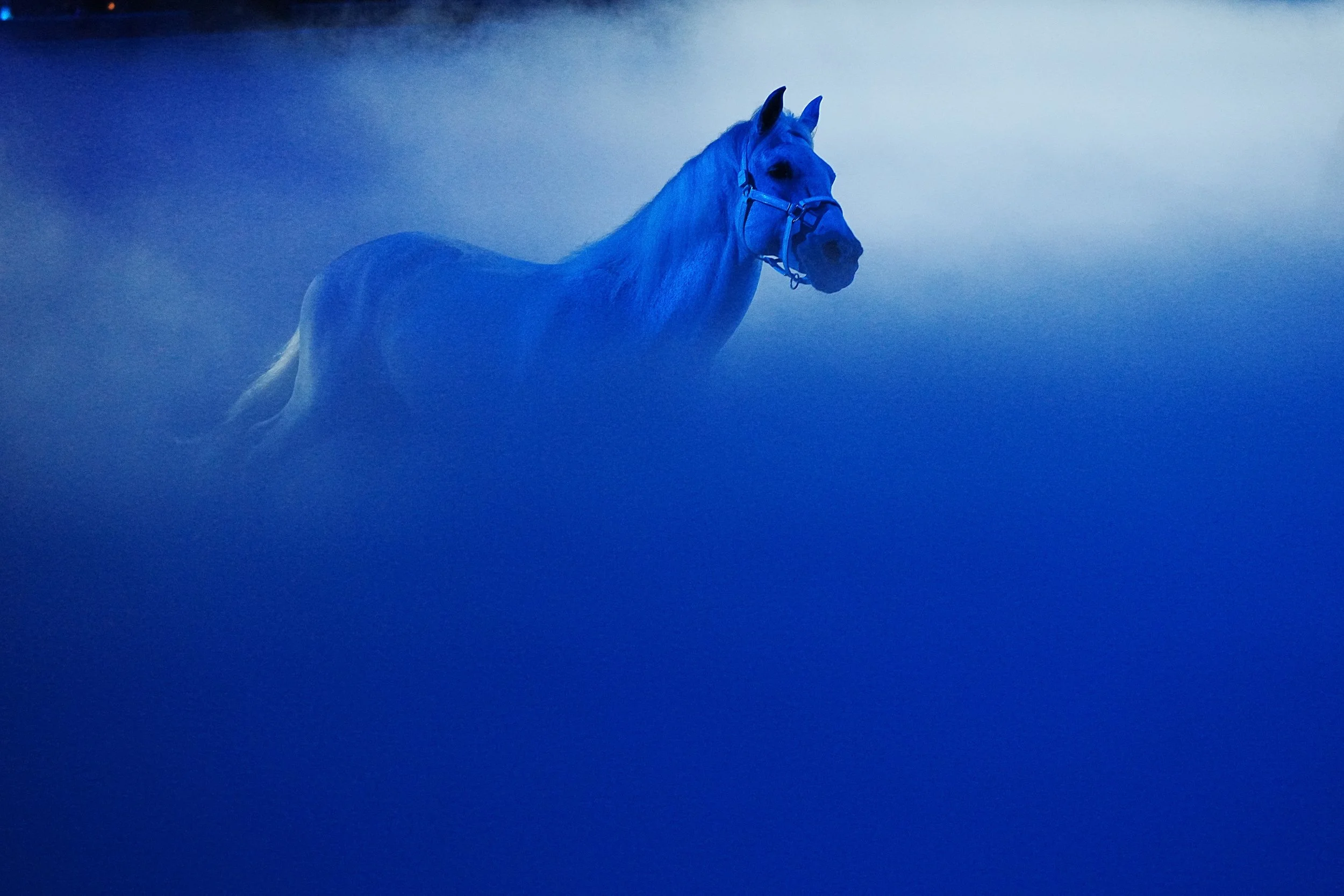
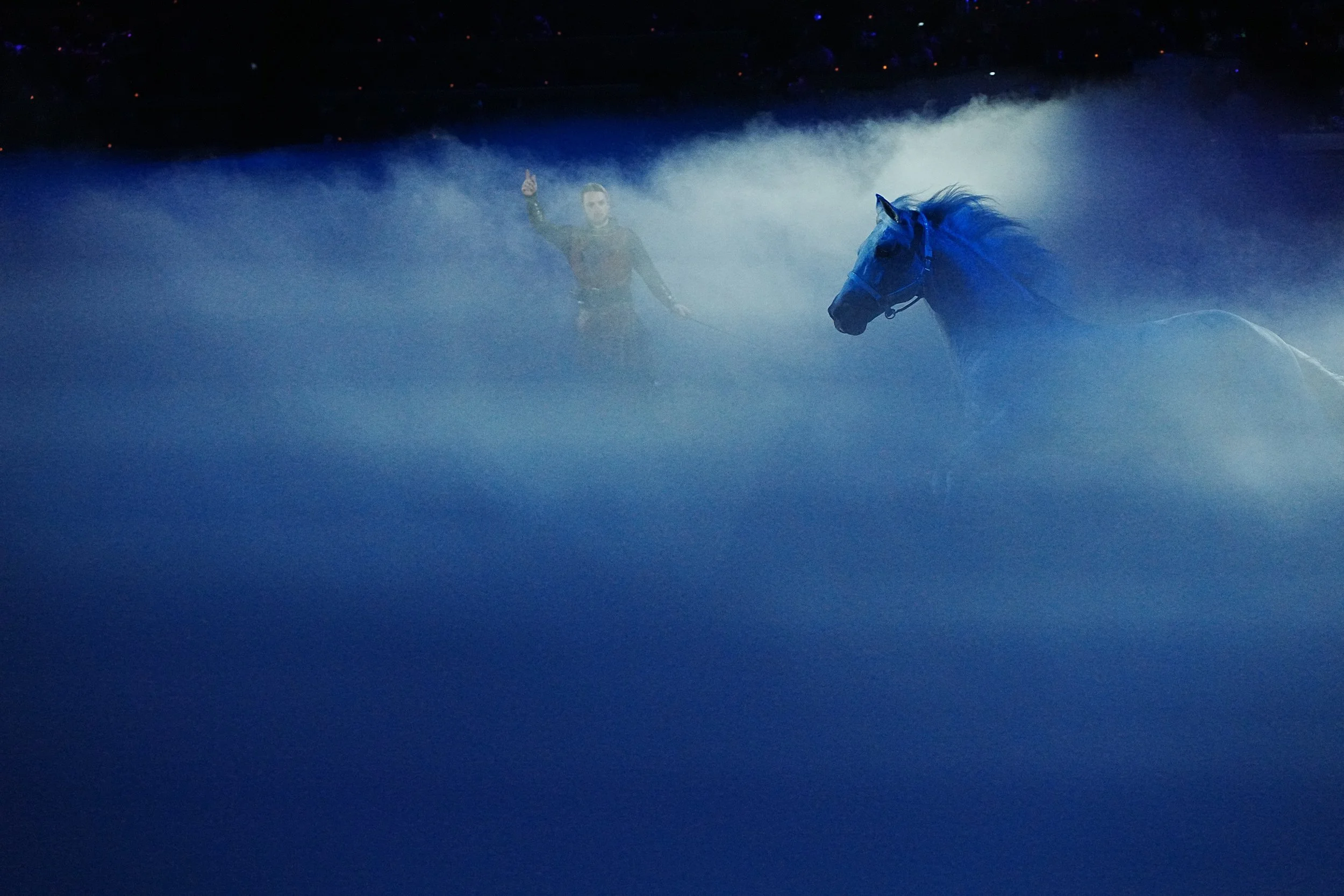
Don Temple of Leon, (Andy) on his trusted steed, Hercules, a purebred Hanoverian.
My fork in the road moment
I had begun my training as what we call an apprentice knight. That title is given to those who are squires, have shown interest, and have been chosen to move forward with learning to perform a specific entry-level role for a beginner knight in the show. A big part of that is learning how to ride horses.
It was almost a year before my training was fully underway, held back a little by our busy schedule throughout the summer months. By September, the busy summer slowed down as people went back to work and school, and my training was fully underway.
I was pretty much on horseback for four hours, then on the ground, running over my newly learned fight again and again, for probably another four hours in each training session.
A little context about me. Back then, I was 19, going on 20. Physically, I was very skinny, somewhat small, and smaller than my average coworker. I had lean, defined muscles, beaming with muscle. My cardio level wasn't too bad, particularly since I was a Squire and, as such, running around doing anything and everything as fast as I could.
That said, the rigorous training I underwent to become a knight was gruelling. I was tiring very easily. Part of the process was getting stronger in the sword-fighting plan and expanding the riding aspect of the job. By the end of the 3rd and 4th run-throughs of the fight, my legs were like Jello. I could barely stand, and raising my arms was close to impossible.
My trainers were senior-level and had been performing the show at other “Medieval Times” castles for anywhere from three to five years. All of them had a deep passion for their work, were level-headed, and worked to ensure the younger generation succeeded in their parts and in their footsteps. Hence, they were rather strict in their teaching methods.
At the time, if I remember correctly, I was with three or four other Squires who were training as apprentice Knights
As the days went on and my fellow apprentice Knights were similarly physically drained, our mentors would show their strict side in the spirit of encouragement. They would become our cheerleaders and our toughest drill sergeants.
The encouragement was sharp. They wanted to see us succeed, and every detail that was out of place, including missed strikes, improper form, poor footwork, and a tap on the reset button to begin again from the top, regardless of how invested we were or how far we were into the sequence at that moment.
It sounded like it was stressing the guys, who had more than likely never experienced anything as difficult as this. Emotions were high, sharp words were exchanged, and patience was worn thin. Tears were even shed. Those things eventually led some of my fellow trainees to admit defeat. None of our mentors admitted that it was too difficult, that they weren't cut out for it, or that their bodies couldn't handle the stress, and therefore they gave up.
I had to hit a wall, too, after a great number of run-throughs, during which the focus was on striking a certain sequence. I became infuriated by the constant berating from my trainers, who were, in turn, frustrated. Why was the simple sequence so difficult? Why could I not just do it right?
My response was what they might have believed was insubordination and childish. After a brief scolding, I felt like I had had enough. I thought to myself, This isn't going to happen, or I can't do this anymore. With those words in my head, I threw the sword into the sand and stood there a moment, all eyes on me, silence in the air. Nobody said anything. In that moment, my first instinct was to walk out of the arena, give up, throw in the towel. In a matter of seconds, my thoughts changed. Empty-headed, I took a deep breath, walked over to my mondoble (broadsword) lying in the sand, picked it up, and went back to my starting position. I assumed the ready stance from where we had been repeatedly starting until I corrected my issues.
Shortly thereafter, I had achieved what I had been failing at and understood what I had to do. We ran the sequence about a half-dozen more times until it became more ingrained in me. Had I chosen an alternative, not picking up that sword and exiting the arena in a temper tantrum, I strongly believe, looking back now, being older and a little, just a little, wiser, I would never have become a knight. My journey would have culminated there in that moment. I likely would have stayed as a squire for a while, maybe even as a stable hand, until my time and interest in the job had run out, and I would have been bidding medieval times farewell.
Looking back, it really was a life-changing decision. As a somewhat wild teenager, I could have dismissed my actions as carefree and ignorant, not giving a second thought to what could have been and, inevitably, what turned out to be a lifelong adventure.
My biggest challenge and how I overcame it.
This question is a hard one to answer. I really had to think about it. I believe the biggest challenge I ever faced in my career as a knight was learning how to perform the stunt falls we do and adjusting parts of the show. As beginners on horseback, we were taught the basics of horseback riding: getting used to sitting in your seat, moving your hips with the horse's rhythm, and, most importantly, keeping your balance so you don't fall off.
At first, I would have said the riding was the biggest challenge, but with consistent repetition and everyday practice, you quickly find that your right posture and hand position become easier. This has been my experience. The next step was one-handed riding, done with one hand while the other held a lance or a flag. Shortly after practising in this way, it became easier and more comfortable.
The next step was the hardest, in my experience. Learning to fall off a moving horse at what felt like 60 miles an hour was terrifying. I had been on horses galloping on trail rides about half a dozen times when I was younger, and because I didn't understand the concepts I was taught, I had an ongoing fear of being thrown off or bounced out of the saddle. The ground seemed so much farther down from atop a horse. Now, anywhere you go to take riding lessons for pleasure or competition, they will never teach you how to dismount a moving horse unless, of course, it's a stunt school of some sort, which is a different situation altogether. Here, it was part of your everyday work routine.
I remember that day well. My first venture into learning to take my first joust hit to my shield, throw my lance and shield, and cast myself off the moving beast beneath me, all at the pace of a gallop. As I was getting on the practice helmet and being handed my shield and the lands, I distinctly remember thinking to myself how hard can it be, really?
Don Temple of Leon (Andy)
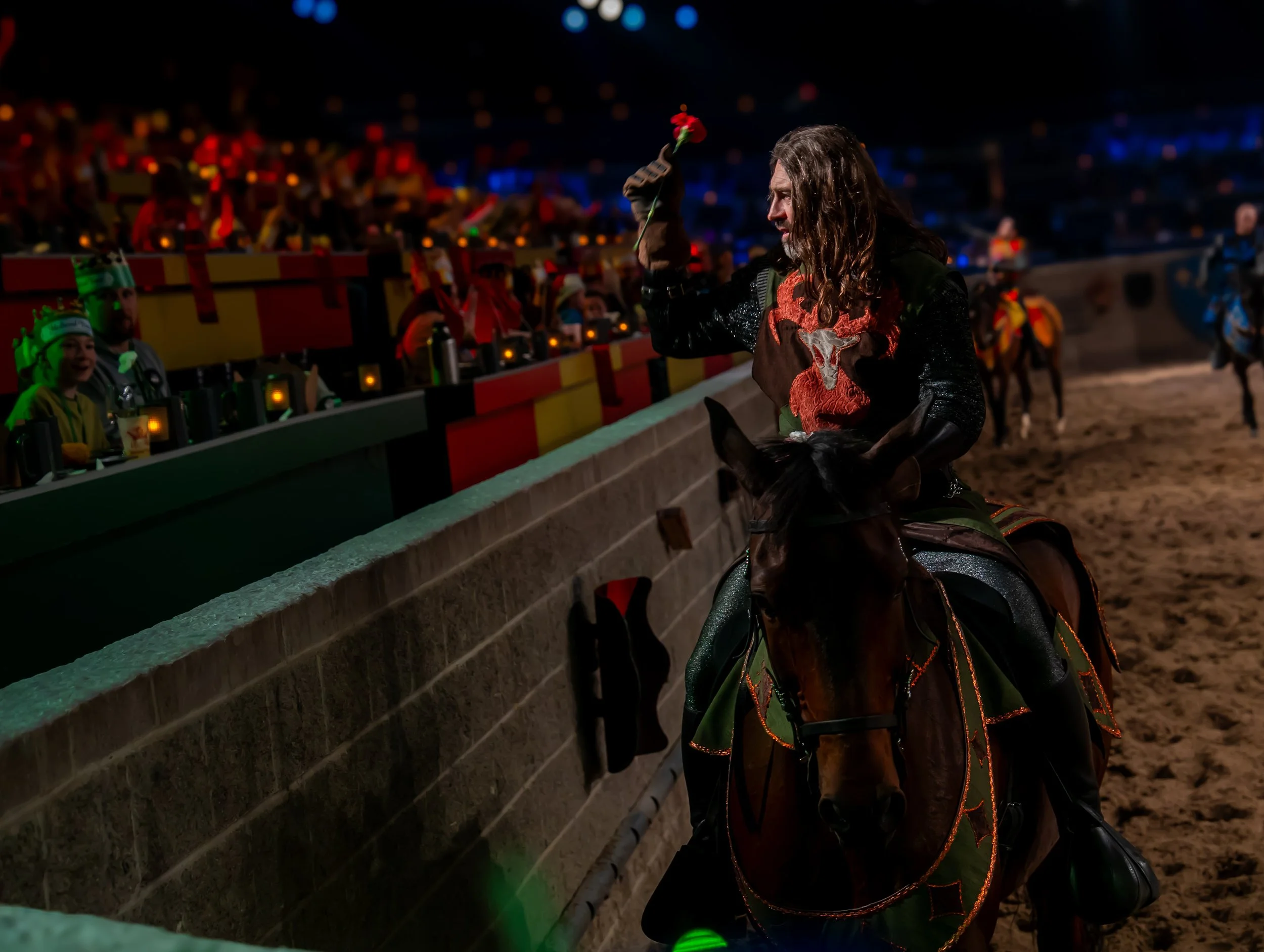
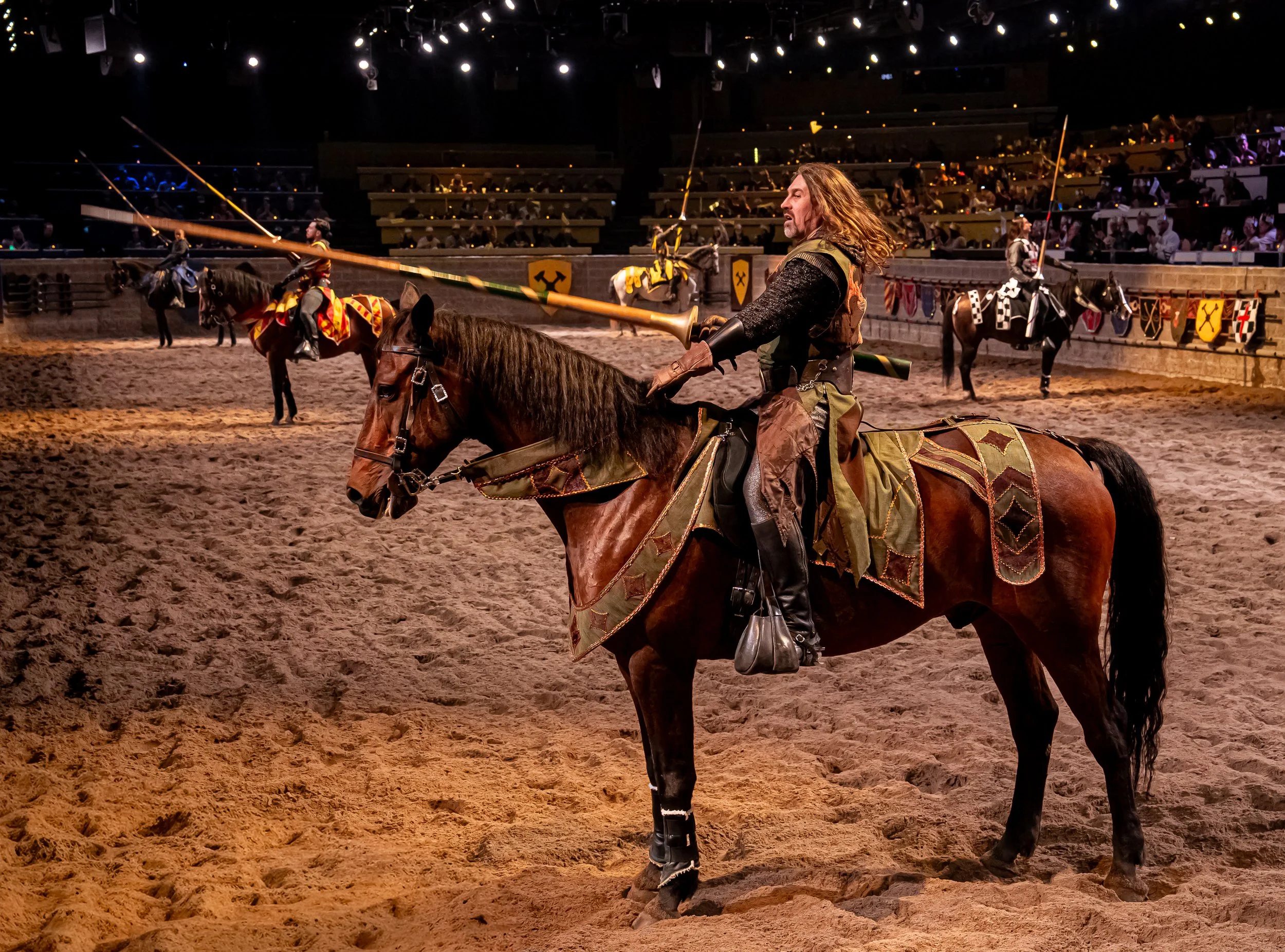
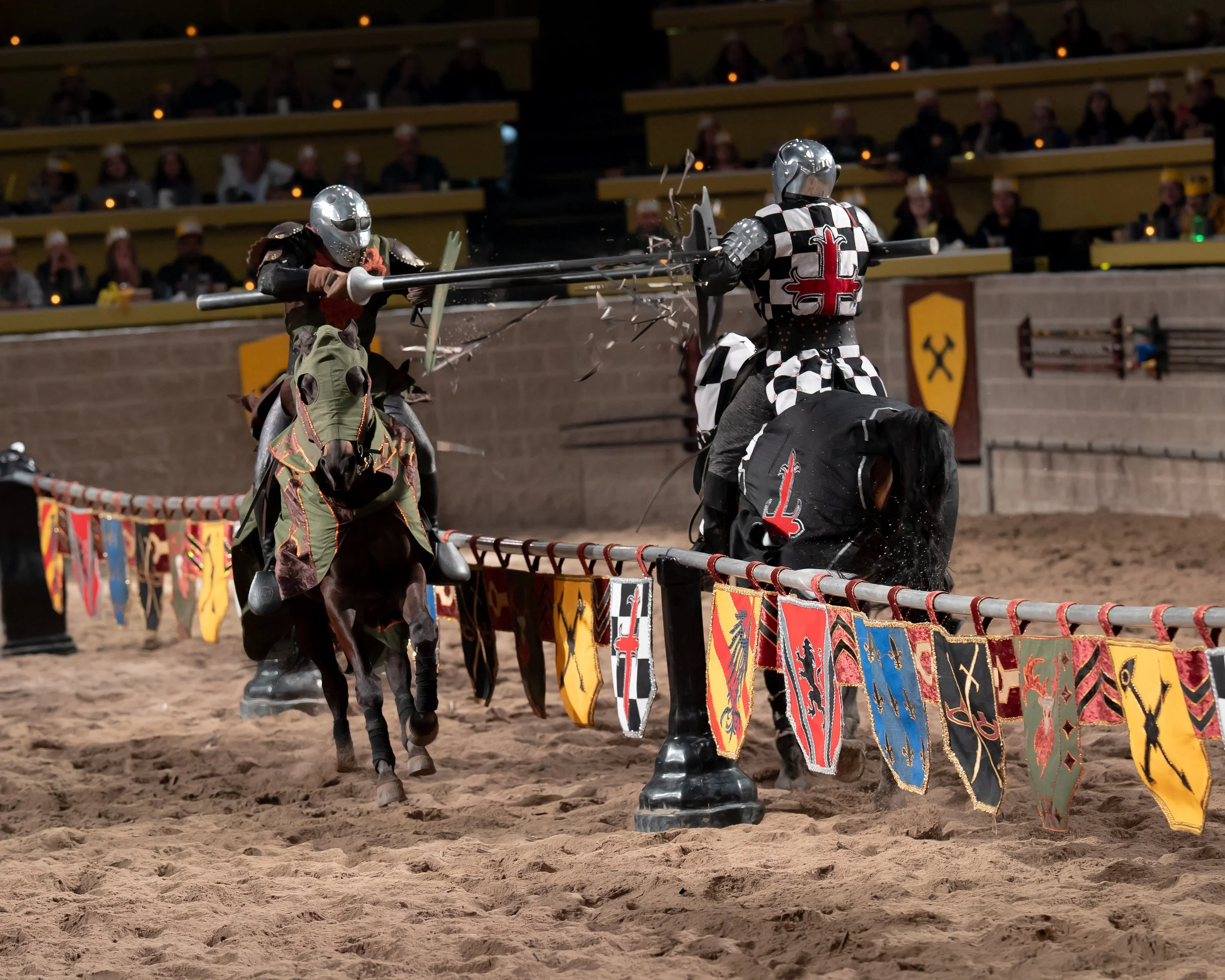
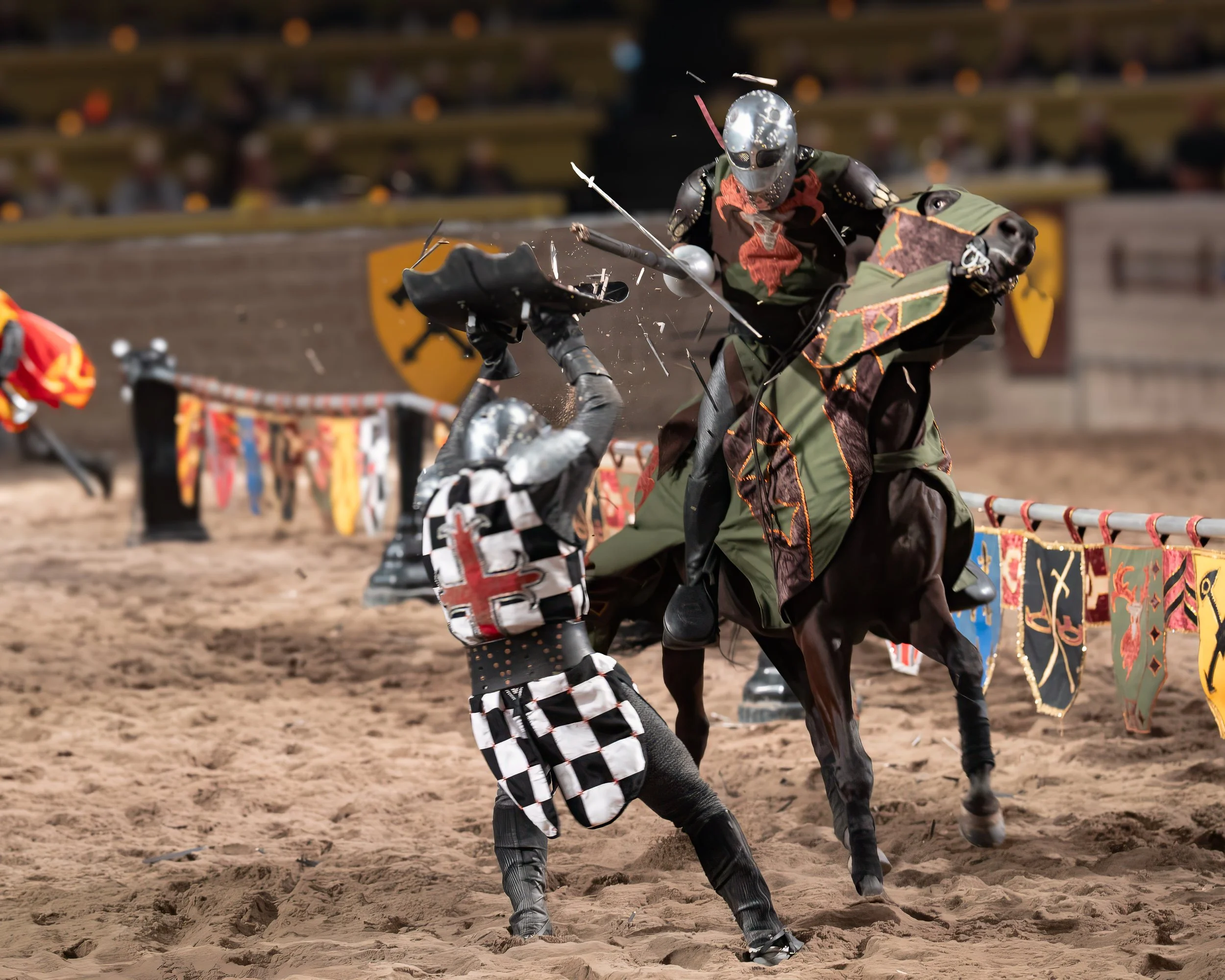
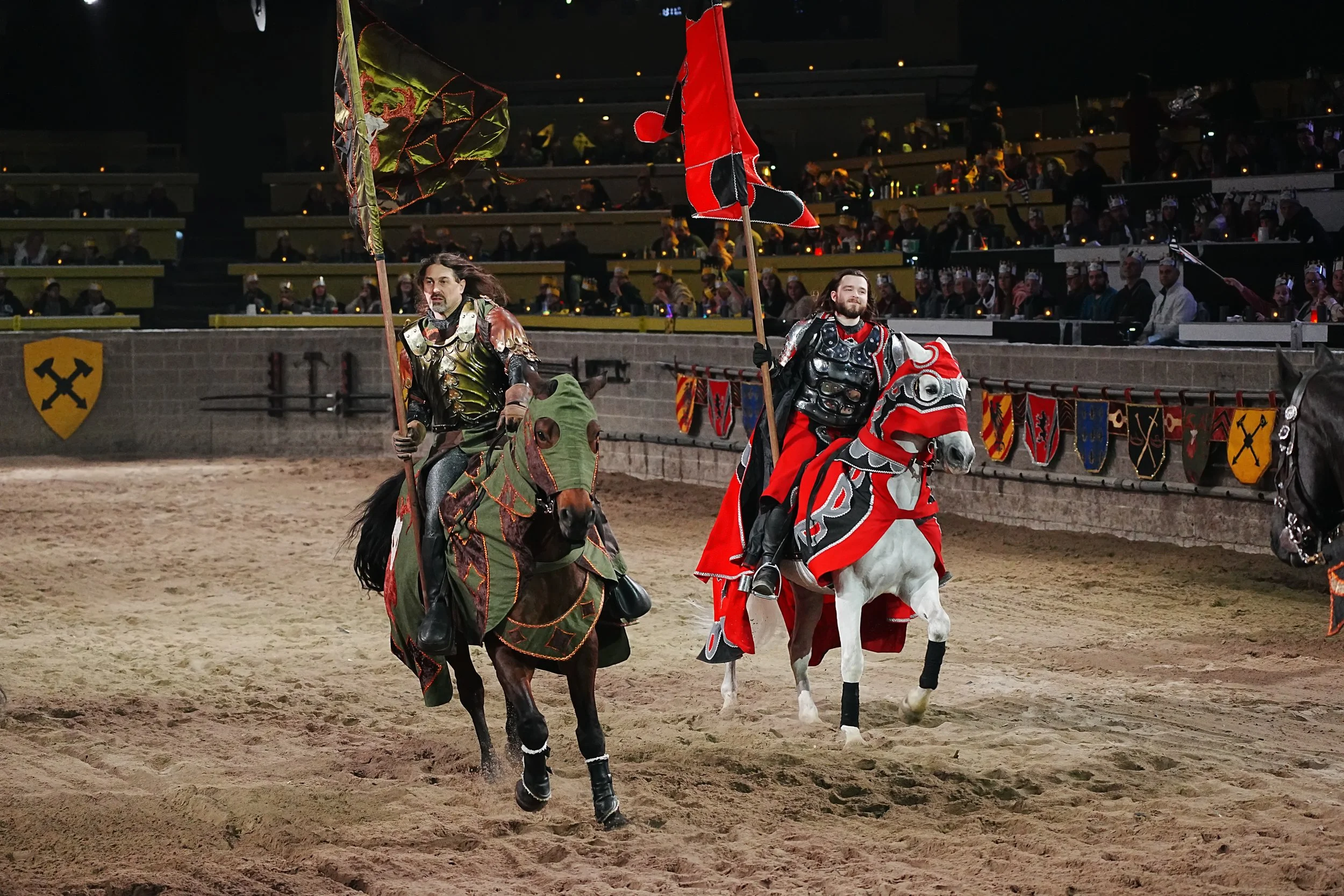
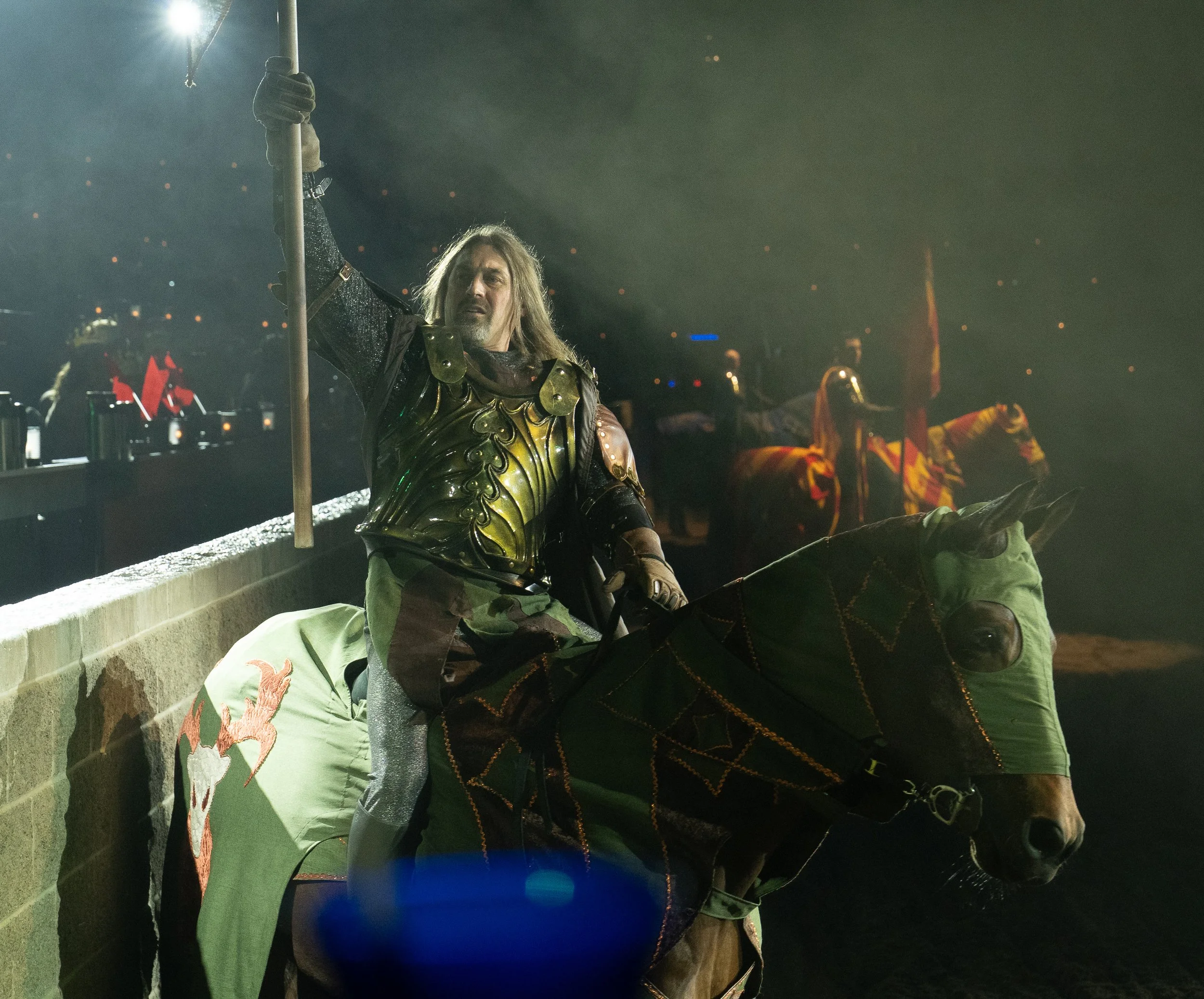
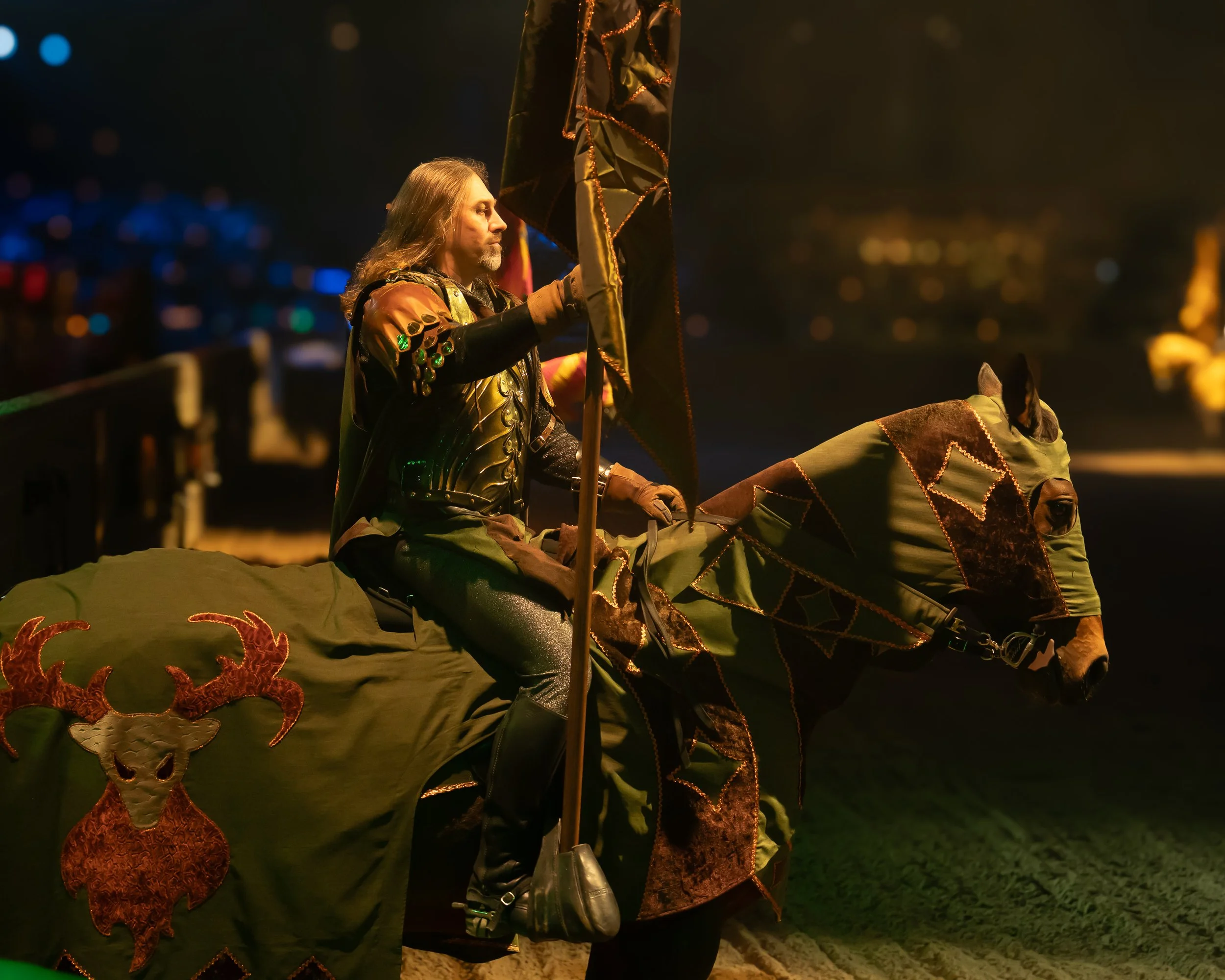
Well, looks and feelings can be deceiving. I had already practised a couple of times that week at the walk, and then, once my superiors felt my performance was adequate to graduate to the next level, the trot. The trot was a little bumpy and harder to sit, but it felt manageable. A few runs up and down at a real trot, and I was ready to venture to the next step, the gallop or canter.
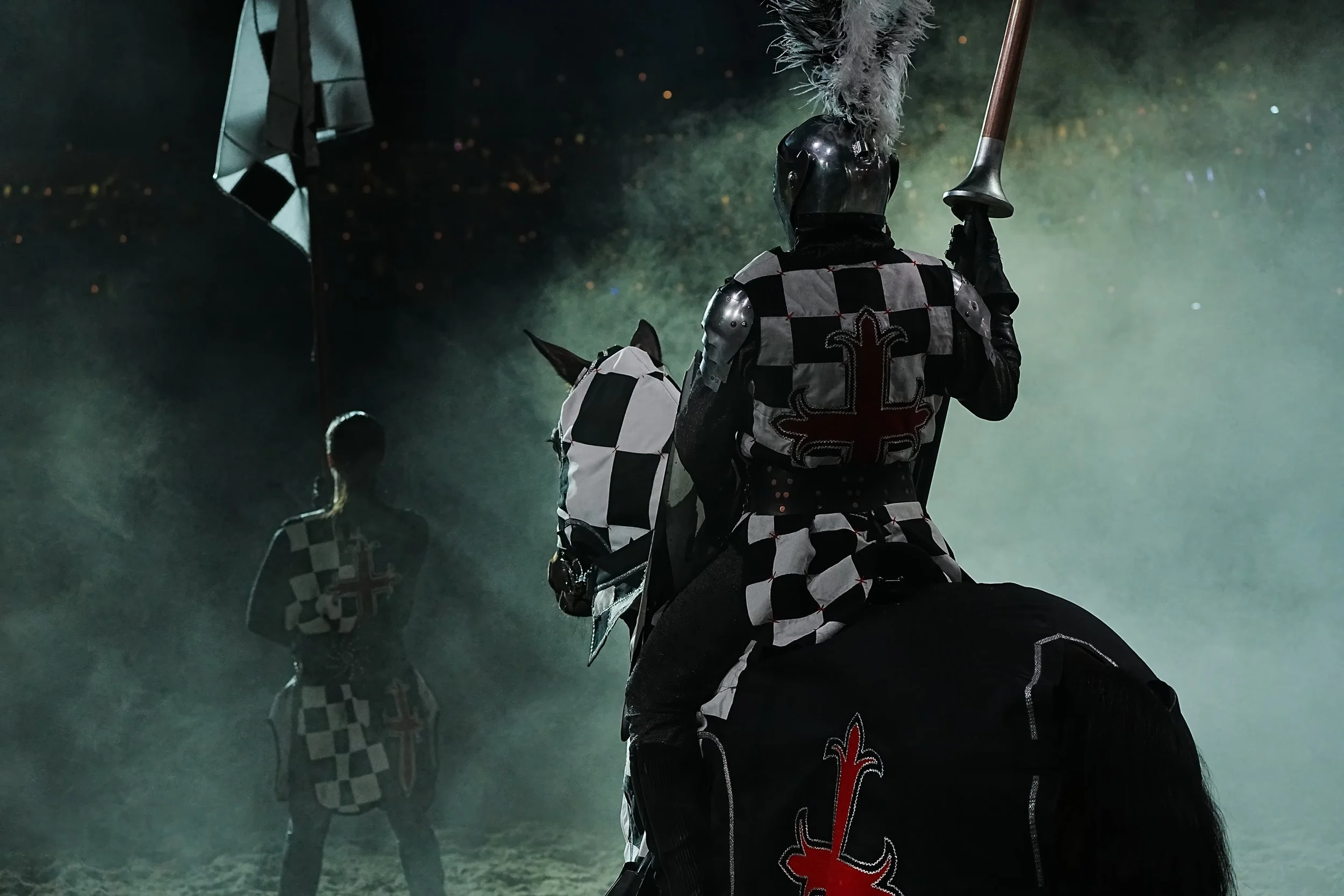
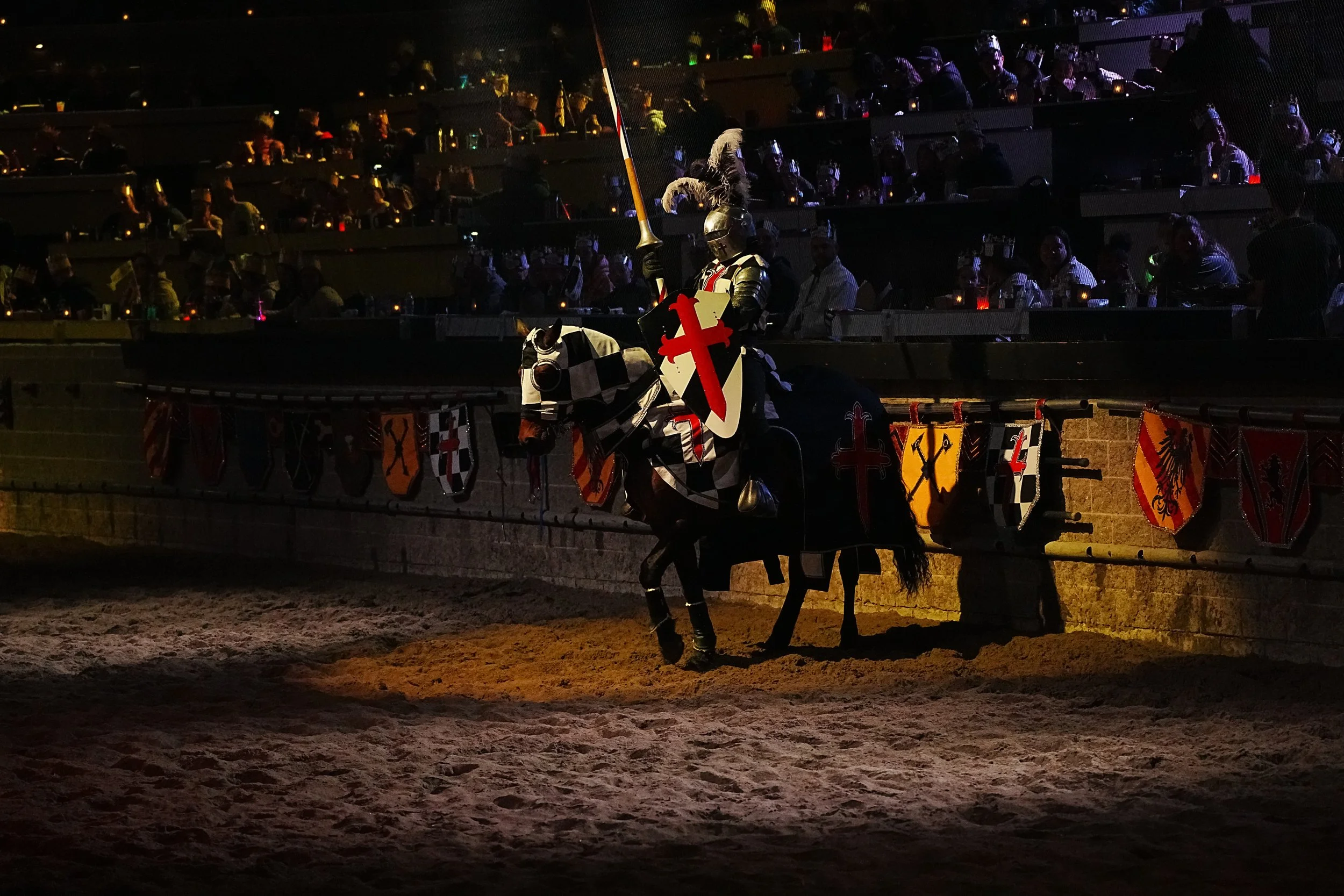
Confidently, I trotted down the corner to the corner of the arena, set into position, and waited for my partner-opponent to raise his lance to signify he was ready. Up went my lance, and then, in a fraction of a second, he was off, barrelling down the rail on his side at what I could only imagine was close to 70 miles an hour, his lance pointed at my shields. 2 seconds later, I followed suit at the same pace on my side of the rail. My shield was up, ready to hear the crunch of the sword slamming into my shield and feel the broken splinters of wood flying everywhere around me. If all went as it should, I was going to throw my lance and shield to their respective sides, crunch my abs, throw my left leg over the horse's neck, push off with the outside of my left leg, and gain distance in the air, eventually making contact with the ground and smoothly transitioning into a barrel roll. Ideally, that was what should have happened.
As soon as I took the hit, I threw my equipment as scheduled, and a wave of nervousness came over me. I froze with my arms out in position to fall, stretched out to the side in a T formation. I rode my horse back into the tunnel. So much went through my head. Had I had another few seconds, I would have felt off balance, a nerve to move in my legs, for fear of losing my posture and balance and falling awkwardly on my face. My body's natural reaction was to grip with my thighs to hang on for my dear life. This didn't help one bit. The result was that the horse spooked and ran faster.
I also felt like I was being bumped around in the saddle, out of sync with the horse's natural rhythm, which again left me off balance and falling awkwardly to the ground. Several attempts later, I repeated the same mistakes as my first ever attempt, with no success.
As a matter of fact, I had taught myself the bad habit of gripping the horse with my thighs for stability when I could feel the impact of my opponent's lance about to happen, and, as I mentioned earlier, this action in turn made my horse speed up.
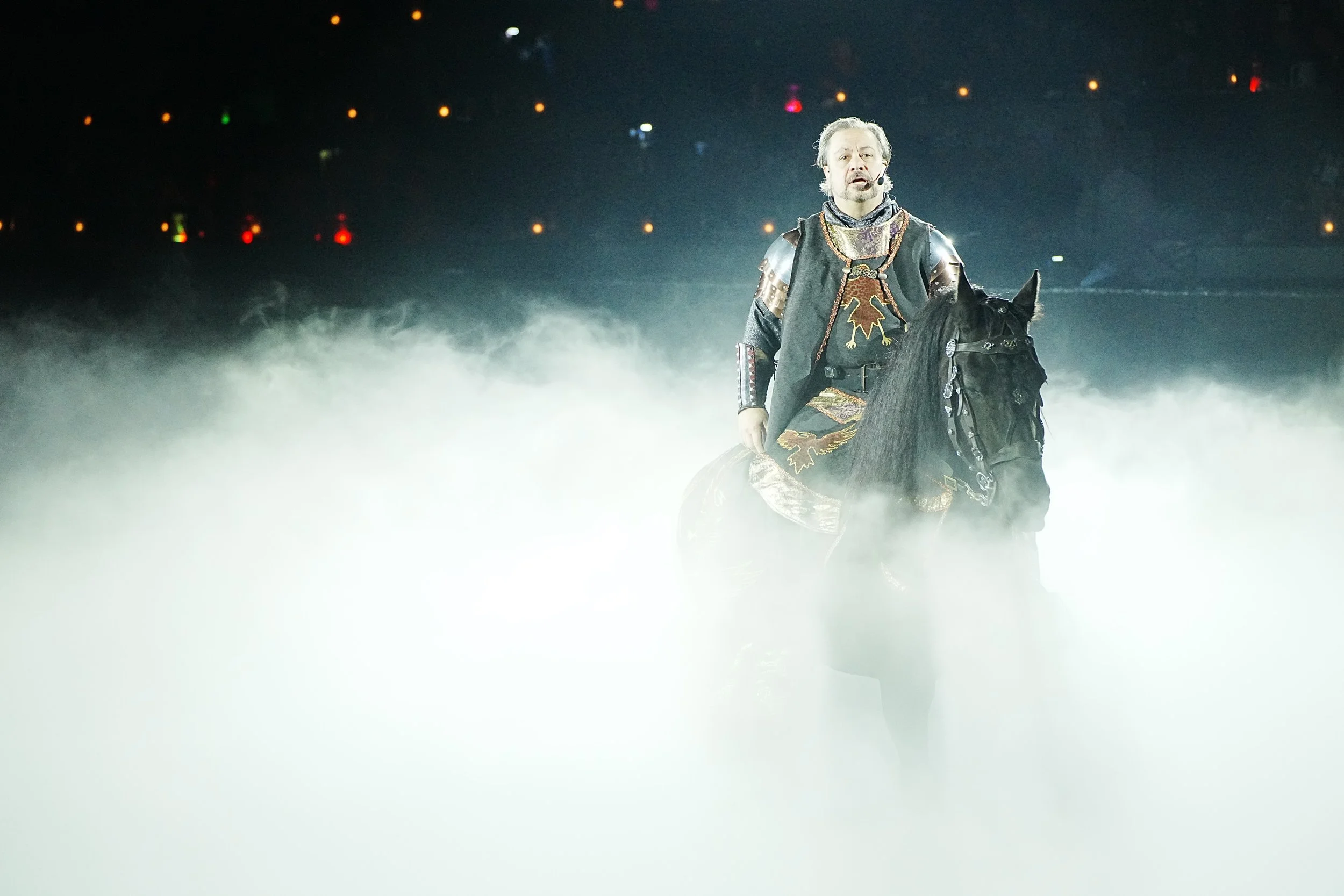
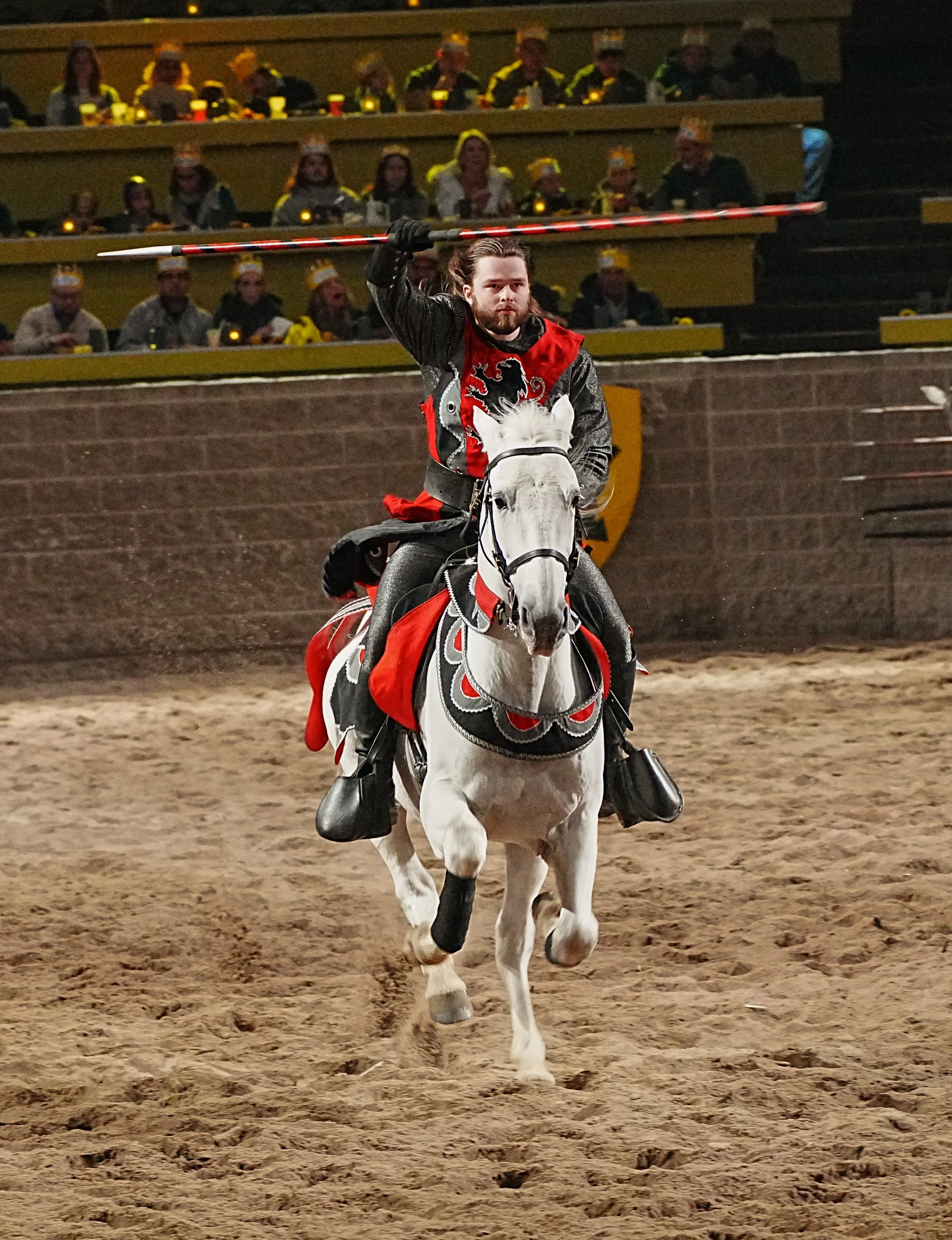
Several days went by during which we practised stunt falls. I felt I was getting worse, and I completed only one clean stunt. Yet without being able to perform this one thing, I was not going to be allowed to do the first show.
Then, in one practice, as I was nearing the end of the day, I was granted permission to try one more time, somewhat bummed by the barrage of failure. I thought to myself, I mounted my horse, with the assisting Squire nearby, armed with the shield, helmet, and lance. I galloped down to my corner. This time, I didn't have a partner or need one. My superiors had established that the issue I was having was strictly mine, my fear of coming off the horse. It had nothing to do with the lances hitting shields or anything. The entire issue was my own doing.
I waited a second, raised my lance, and in that moment I told myself, if this happens, it happens; otherwise, it never will.
At the other end of the arena, the knight yelled, “Go,” and I was off down the rail at a pace that rivalled any IndyCar. I had a perfect shield and lance position. My arms gripped the equipment, and I yanked my leg up and over the horse's neck, firmly placing it at his shoulder. With sheer force, I pushed off. I landed in the air, away from the horse. The second I was airborne felt like an eternity, and as I hit the ground with such momentum, I rolled 10 feet away. At last, I had done it. The question was, could I do it again?
With much praise from my surrounding coworkers, the supervising night asked if I wanted to try again. I said absolutely. As I monitored my horse again and armed up, I said to myself, What in the hell was I afraid of?” We did three more runs that day, and each time was better than the last. In a small way, this feat earned me approval to take on my first role later that week.
What would you say to a younger version of you?
When it comes to this field of jousting entertainment. You have to dedicate yourself. You just have to keep at it and take care of your body; you don’t need to live like a rock star.
Accept and acknowledge that challenges are a part of this world. Accept it and understand that no one can be 110 percent of the time. Show up; in this show, rep it out, enjoy the journey.
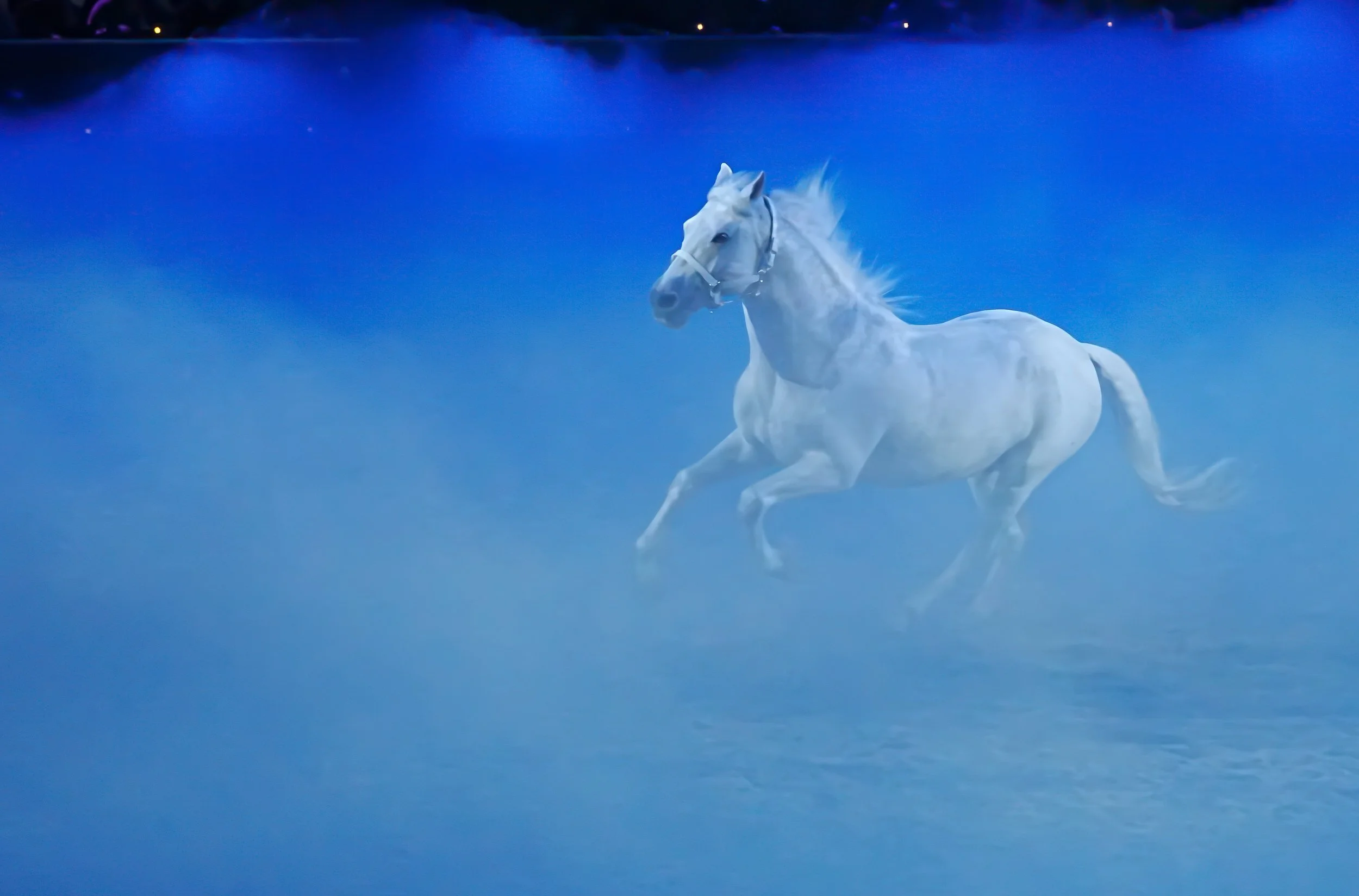
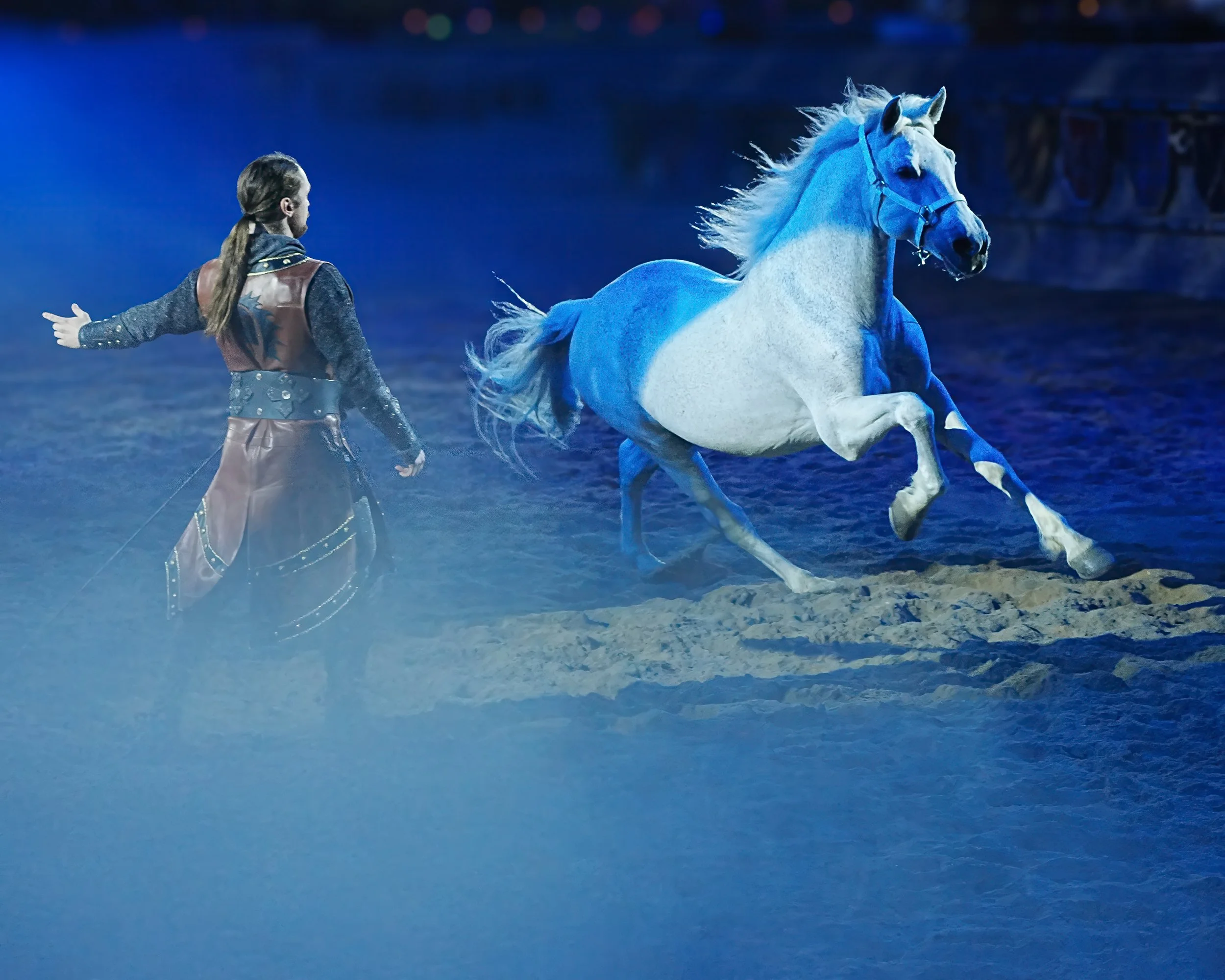
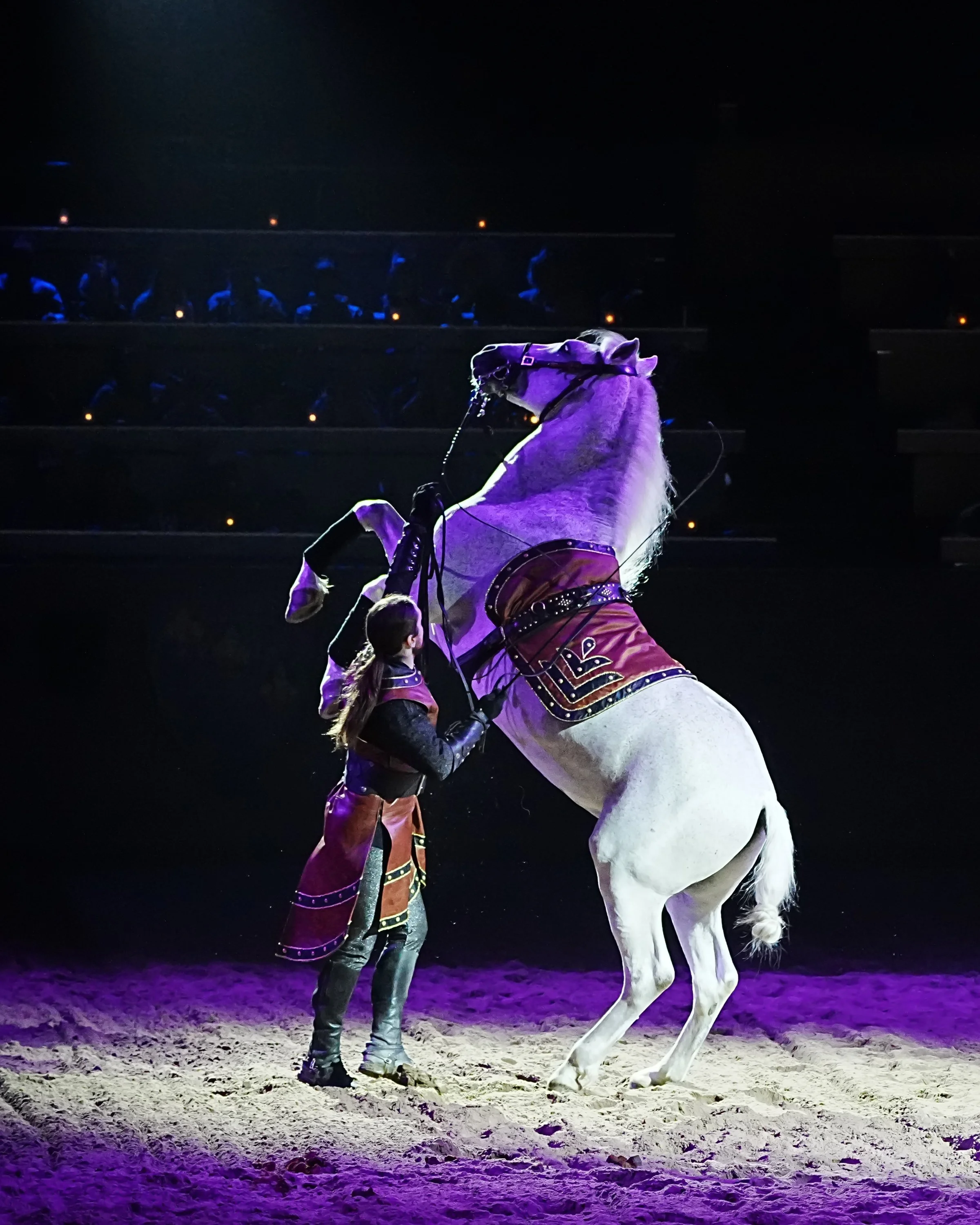
Acknowledging the Medieval Times collective of Knights, squires, serving staff and management for this access. You put on an amazing experience. Thank you for allowing me access.